The Documentation Failures That Derail Good Extraction Processes
Good documentation practice extraction is a subject that stays invisible until something goes wrong - then it surfaces everywhere at once. An inspector who finds white-out on a batch record. A QA manager who cannot locate the calibration certificate for the balance used in a failing batch. A customer auditor who finds two versions of the same SOP in active circulation. None of these are process failures. They are documentation practice failures, and under every major GMP framework they are treated with the same seriousness as a process deviation. EU GMP EudraLex Volume 4 Chapter 4 - documentation requirements defines good documentation practice GMP as essential to any regulated manufacturing operation.
This guide covers the GDP rules every extraction team must follow - from the operator completing a batch record in real time, to the QA manager reviewing it before release, to the quality director maintaining version-controlled SOPs across a multi-product facility. These rules apply to every document in a good documentation practice extraction facility.
GMP documentation for extraction facilities - what records you actually need covers the full document set. This guide focuses on the documentation practice rules that govern how every one of those documents is correctly completed and maintained.
Discover the Right Extraction System for Your Needs
ALCOA+: The Framework Behind Every GDP Rule
Good documentation practice GMP across EU GMP, FDA, and WHO converges on ALCOA+. FDA data integrity guidance - ALCOA+ principles for pharmaceutical manufacturers defines ALCOA as Attributable, Legible, Contemporaneous, Original, and Accurate. The + adds Complete, Consistent, Enduring, and Available. Every GDP extraction GMP documentation rule traces to one of these nine attributes:
Attribute | What It Requires | Failure in an Extraction Facility |
Attributable | Every entry traced to the person who made it - signature, initials, or unique user login | Batch record entries with no signature. Shared SCADA login credentials where individual actions cannot be attributed. |
Legible | Every entry readable by anyone, including an inspector reading it five years later | Handwriting unreadable without asking the author. Faded thermal paper records. |
Contemporaneous | Entries made at the time of the activity - not reconstructed later | Batch records completed at end of shift from memory. Manual transcription of SCADA data rather than direct capture. |
Original | The first record of the observation - not a copy or reconstruction | Photocopied batch records submitted as originals. Typed 'clean copies' of handwritten records. |
Accurate | Values recorded reflect what was actually observed or measured | Yield calculated from expected output rather than actual weighed result. Temperature from memory of the setpoint. |
Complete | All required fields populated; all required records generated | Blank fields in a batch record. Missing in-process check results. Unsigned QA review column. |
Consistent | Dates, times, and sequences are internally logical | QC check recorded at 09:00 for a batch the equipment log shows did not start until 10:30. |
Enduring | Records stored in a form that remains readable for the required retention period | Thermal paper used for primary records (fades in 5–10 years). Electronic records with no backup system. |
Available | Records retrievable within a reasonable timeframe on inspector or auditor request | Filing system requiring days to locate a specific batch record. Off-site archive with no index. |
The GDP ALCOA extraction GMP test is simple: for every entry in every record in your facility, can you demonstrate all nine attributes? If any one fails, the record fails - regardless of whether the underlying process was correct.

The Four GDP Rules That Trip Up Extraction Teams Most Often
Good documentation practice extraction failures cluster around four specific rules that extraction facilities consistently underestimate:
- The contemporaneous rule: records must be completed at the time of the activity. For a documentation practice extraction facility, the test is: if the operator had to walk away and return to the record, do they confirm values from a real-time source - instrument readout, SCADA log, calibrated scale display - or from memory? SCADA automatic data logging is the most effective implementation of this rule because the system records values as they occur, not as the operator recalls them.
- The correction rule: every correction must use a single line-through that leaves the original entry legible, plus the corrector's initials, date, and a brief reason. White-out, erasure, overwriting with the same pen, or covering an entry with correction tape are GDP ALCOA extraction GMP violations - they obscure what was originally recorded. The rule applies regardless of whether the correction itself is legitimate.
- The attribution rule: every entry, every signature, and every correction must be traceable to a specific individual. The GDP extraction GMP documentation framework is explicit: shared logins, group signatures, or anonymous entries are attributability failures. For SCADA-controlled extraction systems, each operator must have a unique login with role-based access permissions - not a shared departmental credential.
- The original record rule: the first record created during an activity is the original. Every subsequent copy, transcription, or data transfer is a derived record. A good documentation practice GMP extraction facility retains the original. Typed summaries of handwritten field records, or photocopies submitted as originals, are data integrity deficiencies under GMP data entry rules extraction teams are expected to know.
Extraction Document Control: How GDP Applies to SOPs and Forms
Extraction document control GMP applies the same GDP rules to controlled documents - SOPs, specifications, forms, templates - as it does to records, with additional requirements specific to versioning and distribution. ICH Q10 Pharmaceutical Quality System - document control requirements frames document control as foundational to the pharmaceutical quality system applicable to botanical extract manufacturers.
- Every controlled document has a unique identifier, a version number, and a defined review cycle. The reason for every version change is documented in the revision history - available for inspector review.
- Obsolete versions are immediately withdrawn from active-use locations on the new version's effective date. An operator following version 1.2 when version 2.0 is current has not followed the approved procedure - regardless of the outcome.
- Form templates used to generate records - batch record forms, calibration log sheets, cleaning checklists - are version-controlled documents under extraction document control GMP. A batch record completed on an obsolete form is a documentation deficiency.
- GDP rules GMP facility document distribution requires either a master list of where each document is physically held, or an electronic document management system that automatically serves the current version at every access point.
The GDP rules GMP facility teams must apply to electronic systems are not lighter than those for paper - they are equivalent in principle and stricter in implementation. The GMP data entry rules extraction facilities follow for electronic records mirror the same ALCOA+ framework applied to paper, with audit trails serving as the electronic equivalent of the line-through correction rule. GDP rules GMP facility compliance in digital environments requires the same contemporaneous, attributed, and accurate entries - just enforced by system controls rather than operator discipline alone.
Electronic systems that generate GMP data entry rules extraction requirements automatically - by capturing instrument values from calibrated sensors rather than relying on manual input - satisfy the contemporaneous and accurate ALCOA+ attributes without depending on individual operator behaviour.
Electronic Records: What GDP Requires Beyond Standard IT Practice
Electronic records in extraction facilities are governed by FDA 21 CFR Part 11 and EU GMP Annex 11 - the electronic equivalent of good documentation practice extraction rules. The GMP data entry rules extraction facilities must follow for electronic records:
- Audit trail: every change to an electronic record generates an entry recording who made the change, what changed (old and new value), when, and why. The audit trail is retained for at least as long as the primary record and is accessible during inspection. A SCADA system with no audit trail does not satisfy electronic data integrity extraction GMP requirements.
- Access control: unique user login per operator with role-based permissions. No shared credentials. System access rights reflect actual job responsibilities - an operator without batch release authority must not have the system access to perform a batch release.
- System validation: any electronic system used to generate, store, or review GMP records must be validated. For SCADA extraction systems, this is typically part of the equipment OQ/PQ - but the software validation element is often missed in qualification plans.
- Backup and recovery: electronic records backed up at defined intervals, with backup integrity testing and a documented recovery procedure. A documentation practice extraction facility operating on a single unmirrored server with no backup plan fails the 'enduring' and 'available' ALCOA+ attributes simultaneously.
How SCADA-enabled intuitive intelligence improves extraction monitoring and audit trails explains how BES extraction systems generate contemporaneous, attributed, and auditable electronic records that satisfy GDP extraction GMP documentation requirements automatically.
For manufacturers considering how SCADA audit trails translate into compliant GMP data entry rules extraction programmes, how manufacturers achieve consistent extract profiles with advanced extraction technologies covers the process consistency framework that a robust good documentation practice GMP extraction facility builds its records on.
Where Buffalo Extraction Systems Fits In
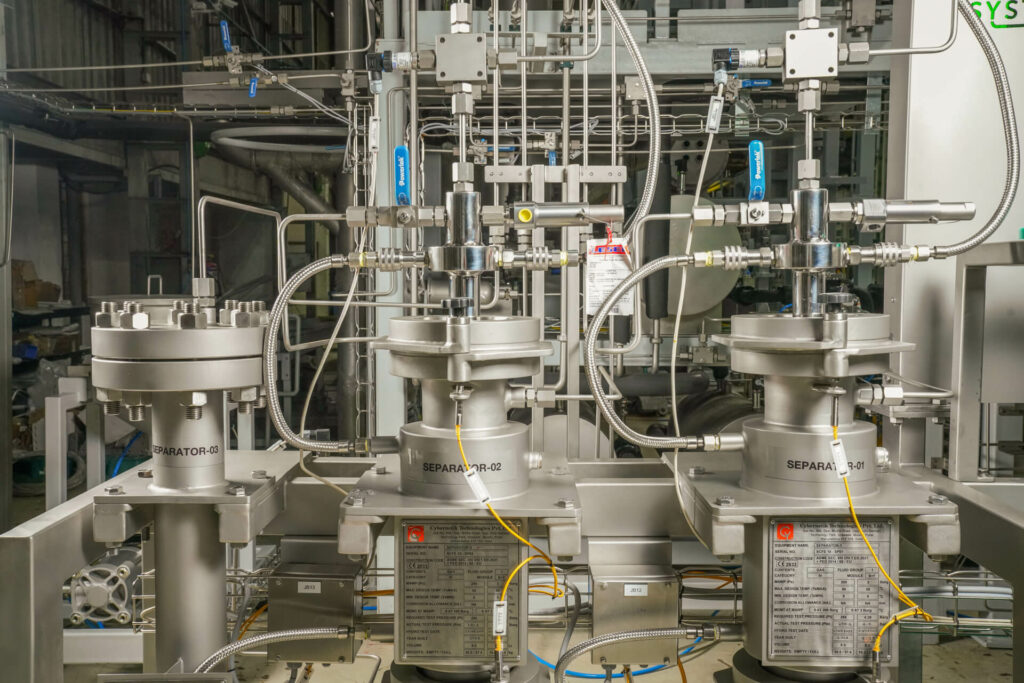
Buffalo Extraction Systems extraction systems include SCADA control with full audit trails - every parameter change, recipe selection, and operator action time-stamped and attributed to a unique user login. This directly closes the three most frequently cited good documentation practice extraction failures in extraction facilities: contemporaneous records (SCADA captures values in real time), attribution (every action tied to an individual login), and accuracy (values from calibrated instruments, not operator memory). Enhancing extract purity and food-grade standards in large-scale CO2 extraction covers how automated data capture in large-scale systems eliminates the gaps that manual good documentation practice GMP programmes struggle with most. Three capacity scales at 200, 500, and 1,000 kg/hr dry output.
Conclusion
Good documentation practice extraction is what makes your process records credible. The GDP ALCOA extraction GMP framework - all nine attributes - applies to every record your facility generates: batch records, cleaning logs, calibration records, training records, deviation reports. The failures that cause inspection findings are rarely sophisticated: white-out on a batch record, blank fields, shared logins, or yield values that do not match the weighing equipment record. GDP rules GMP facility teams must follow are simple, non-negotiable, and not optional. Build them into your team's daily habits from the first batch, and they cost nothing. Retrofit them after an inspection finding, and they cost significantly more.
Frequently Asked Questions
What is good documentation practice in extraction?
Good documentation practice extraction (GDP) is the set of rules governing how GMP records are created, completed, corrected, stored, and retrieved in an extraction facility. The underlying framework is ALCOA+: Attributable, Legible, Contemporaneous, Original, Accurate, Complete, Consistent, Enduring, Available. All nine attributes must be satisfied for every record - batch records, cleaning logs, calibration records, training records, and SOPs. GDP extraction GMP documentation requirements are defined under EU GMP Chapter 4, FDA 21 CFR Part 11, and WHO GMP.
What is the ALCOA+ framework for GMP extraction documentation?
GDP ALCOA extraction GMP defines nine mandatory attributes: Attributable (every entry traceable to the person who made it), Legible (readable by anyone at any time), Contemporaneous (completed at time of activity, not later), Original (first record of the observation), Accurate (values from actual instruments, not memory), Complete (all required fields), Consistent (logically ordered dates and times), Enduring (stored in a readable form for the required retention period), Available (retrievable within a reasonable timeframe on inspector request).
How should a correction be made in a GMP extraction record?
The correct GDP method: single line-through leaving the original entry clearly legible, the corrector's initials, the date, and a brief reason. White-out, erasure, overwriting, or correction tape are GDP ALCOA extraction GMP violations - they obscure what was originally recorded and create the appearance of deliberate concealment regardless of intent. The good documentation practice GMP extraction rule on corrections applies to every record in the facility, from batch records to calibration logs.
What GDP rules apply to electronic records in extraction facilities?
Electronic records must satisfy: unique user login with role-based access (no shared credentials); full audit trail recording who changed what, from what to what, when, and why; system validation demonstrating the software does what it is designed to do; and backup and recovery at defined intervals with tested restoration. A SCADA extraction system with no audit trail, shared logins, or unvalidated software fails GDP extraction GMP documentation requirements for electronic records.
What is extraction document control GMP?
Extraction document control GMP applies GDP rules to controlled documents - SOPs, specifications, forms, and templates. Requirements: unique document identifier and version number; defined review cycle; documented revision history; immediate withdrawal of obsolete versions on the new effective date; and controlled distribution ensuring every user accesses only the current approved version. Form templates (batch record forms, cleaning checklists) are also controlled documents - a record completed on an obsolete form is a documentation deficiency.