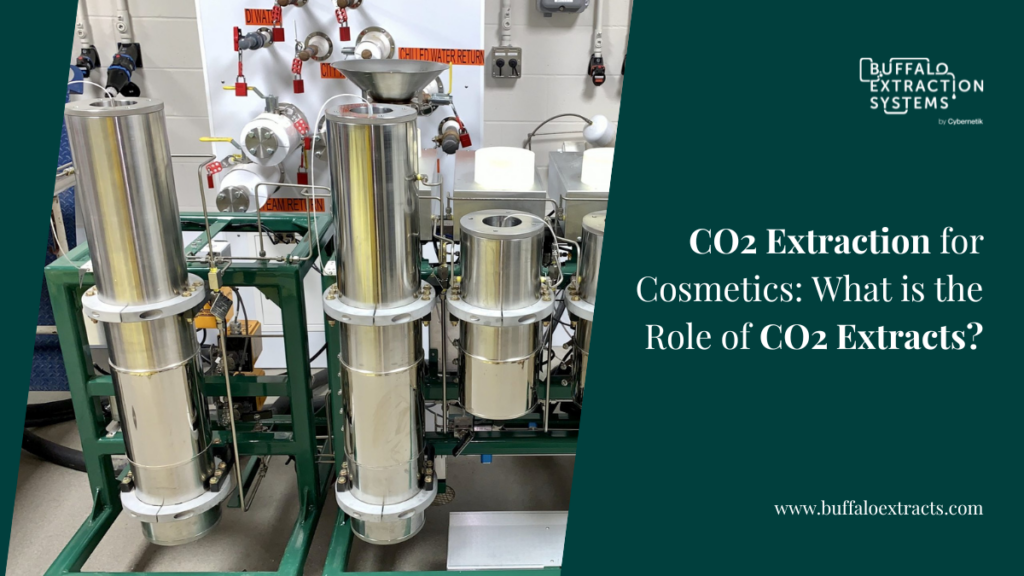
Supercritical CO2 cosmetic extraction is changing the ingredient landscape for premium skincare and personal care formulation. CO2 extracts for skincare capture both the volatile aromatic fraction and the non-volatile bioactive compounds from botanical raw materials - carotenoids, polyphenols, tocopherols, and essential fatty acids - in a single, zero-residue process that conventional extraction cannot match. CO2 botanical extraction produces more complete, more bioactive, and more aromatic true ingredients than steam distillation or hexane extraction.
Supercritical CO2 Cosmetic Extraction: How It Differs from Conventional Methods
|
Quality Factor |
CO2 Extract |
Steam Distilled Essential Oil |
Hexane Solvent Extract |
|
Processing temperature |
35–60°C - all actives preserved |
100°C+ - heat-sensitive compounds degraded |
Ambient - but hexane residue present |
|
Non-volatile bioactives (carotenoids, polyphenols, fatty acids) |
Fully captured |
Not captured |
Partially captured |
|
Solvent residue |
Zero |
None |
Hexane - must be stripped |
|
Aromatic fidelity |
Very high - true-to-plant |
Moderate - 'cooked' note from heat |
Good aromatic but solvent-influenced |
|
Organic certification compatible |
Yes - EU 2018/848, USDA NOP |
Yes |
No - hexane excluded globally |
|
Price tier |
Premium - USD 50–2,000/kg |
Standard |
Standard–premium (fragrance) |
The Most Important CO2 Extracts for Skincare
CO2 botanical skincare extracts span a wide range of botanicals. The most commercially significant are:
- Rosehip CO2 extract: Trans-retinoic acid, vitamin E, linoleic acid. Used in anti-ageing, hyperpigmentation treatment, and scar reduction serums. 200–400 bar, 40–55°C.
- Sea buckthorn CO2 extract: Beta-carotene, omega-7, tocopherols, carotenoids. Brightening, anti-ageing, sun-damaged skin repair.
- Chamomile CO2 extract: Bisabolol, chamazulene, apigenin. Sensitive skin, anti-inflammatory, and redness reduction.
- Frankincense (Boswellia) CO2 extract: Boswellic acids, alpha-pinene. Skin tightening, anti-ageing, scar reduction.
- Rosemary CO2 extract: Carnosic acid, rosmarinic acid - powerful natural antioxidants. Used as both an active ingredient and a natural preservation system in formulations.
- Turmeric CO2 extract: Curcumin and ar-turmerone. Brightening, anti-inflammatory, anti-acne formulations.
- Calendula CO2 extract: Flavonoids, triterpenoids, carotenoids. Wound healing, sensitive skin, and baby care.

The key advantage of supercritical CO2 cosmetic extraction for formulators is completeness. A rosehip CO2 extract contains the vitamin E, carotenoids, and fatty acids of the seed alongside the aromatic volatiles - something a steam-distilled rosehip 'essential oil' (if it even exists commercially) cannot deliver. This completeness is what makes CO2 extracts genuinely more efficacious as skincare actives, not just more pure.
The CO2 botanical extraction of botanical compounds is increasingly a commercial requirement for brands positioning at the premium, clean-label, and organic tiers of the skincare market. For the broader significance of CO2 extracts in the cosmetics industry, see significance of CO2 extracts in the cosmetics industry. For fragrance-specific CO2 cosmetic applications, see fragrance extraction methods: why perfumers use supercritical CO2. For cosmetic CO2 extract procurement and quality specifications, see CO2 botanical extraction for cosmetics: what are the benefits to expect.
FAQs
Q: What are CO2 extracts, and how are they different from essential oils for skincare?
A: CO2 botanical skincare extracts contain both the volatile aromatic fraction and the non-volatile bioactive compounds - carotenoids, polyphenols, tocopherols, fatty acids - from the plant. Essential oils contain only the volatile aromatic fraction. For skincare, the non-volatile bioactives are often the primary therapeutic actives (rosehip retinoic acid, chamomile bisabolol, frankincense boswellic acids), making CO2 extracts significantly more complete as skincare ingredients. CO2 extraction is the method that makes this compound completeness possible at commercial scale.
Q: Which botanicals give the best CO2 botanical extraction for cosmetics extracts for anti-aging?
A: The most effective anti-aging CO2 botanical extraction for cosmetics extracts are: rosehip (trans-retinoic acid, vitamin E - hyperpigmentation, wrinkles, scars); sea buckthorn (beta-carotene, omega-7 - sun-damaged and mature skin); frankincense/Boswellia (boswellic acids - skin tightening, scar reduction); and rosemary (carnosic acid - potent antioxidant active preserving formulation stability).
Q: Are CO2 cosmetic extracts compatible with organic certification?
A: Yes. CO2 is the only non-aqueous extraction solvent approved under EU Organic Regulation 2018/848, USDA NOP, JAS, and NPOP. CO2 extracts from organically certified raw materials qualify for organic ingredient certification - a claim impossible with hexane-extracted cosmetic ingredients.
Q: How are CO2 extracts incorporated into cosmetic formulations?
A: CO2 extracts are added to the oil phase of emulsions and anhydrous formulations at 0.1–5% usage levels. Viscous oleoresin-type extracts (rosehip, sea buckthorn) may need gentle warming (35–45°C) to flow. Free-flowing CO2 essential oil fractions blend directly into oils. CO2 extracts are generally oil-soluble and require emulsification for incorporation into water-based gel or toner formulations. Viscous CO2 extraction outputs (oleoresin-type) may need gentle warming to 35-45°C to flow properly.
Q: What price range should I expect for CO2 botanical extraction ingredients for skincare?
A: CO2 botanical extraction produces skincare ingredients at varying price points: common herb and spice CO2 extracts (rosemary, lavender, chamomile): USD 50–300/kg. Specialty botanical CO2 extracts (sea buckthorn, rosehip): USD 200–800/kg. Rare or certified organic CO2 extracts (high-grade Boswellia, premium rosehip): USD 500–2,000/kg. These compare favourably to their therapeutic impact at typical formulation use levels of 0.1–5%.
Q: Why is CO2 botanical extraction better than hexane for cosmetic botanical ingredients?
A: Three reasons: (1) Zero residue - CO2 reverts to gas, leaving no solvent trace. Hexane residue requires energy-intensive stripping and still carries residue specification risk. (2) Organic certification - CO2 extracts can achieve EU 2018/848, USDA NOP certification; hexane extracts cannot. (3) Compound completeness - CO2 at 35–60°C captures carotenoids, tocopherols, and polyphenols that hexane extraction may co-extract with solvent contamination risk. CO2 extraction outperforms hexane on all three criteria - residue, certification, and compound quality.