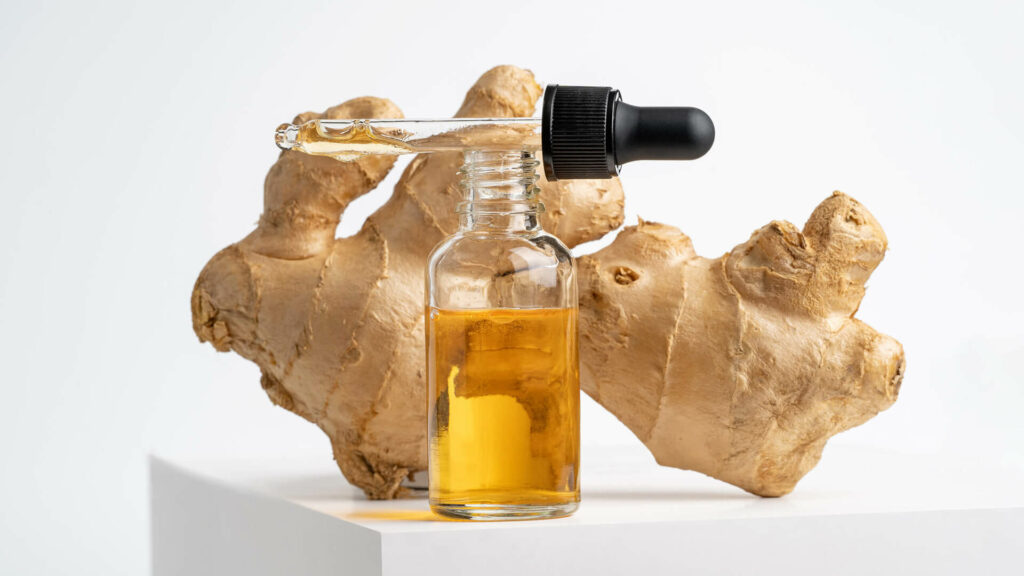
Quick Answer Supercritical CO2 extraction of ginger isolates gingerols, shogaols, and terpenes by passing CO2 above its critical point - 31.1°C and 73.8 bar - through milled ginger rhizome. It is the only ginger extraction method that fully preserves the gingerol profile responsible for ginger's antiemetic and anti-inflammatory effects, while producing zero residual solvent in the final extract. At 90–150 bar, CO2 captures the volatile terpene fraction. At 250-350 bar with an ethanol modifier, it captures the complete gingerol and oleoresin profile. |
What Is CO2 Ginger Processing?
CO2 above its critical point (31.1°C, 73.8 bar) acts as a tunable solvent to isolate gingerols, shogaols, terpenes, and oleoresin fractions from ginger rhizome - preserving the heat-sensitive compound profile that steam distillation destroys.
Ginger contains two distinct compound classes. The volatile terpene fraction - zingiberene, β-Bisabolene - provides aroma and is extractable at 90–150 bar. The phenylpropanoid fraction - gingerols, shogaols, paradols - provides bioactive activity and requires 250-350 bar (or 5–10% ethanol modifier) to extract efficiently. Steam distillation captures only the terpene fraction while destroying gingerols above 100°C. Supercritical CO2 extraction is the only ginger extraction method that selectively captures either fraction - or both in a fractionated run - while keeping temperatures below the thermal degradation threshold.
Ginger's Bioactive Compounds - What Supercritical CO2 Preserves
Key Takeaway CO2 extraction uniquely preserves the complete gingerol family by operating below the 60°C thermal degradation threshold - a limit steam distillation exceeds by 40°C. |
Compound | Class | Thermal Stability | Key Activity and CO2 Advantage |
|---|---|---|---|
6-Gingerol | Phenylpropanoid | Degrades >60°C → shogaol | Anti-inflammatory (COX-2), antiemetic, antioxidant. Fully preserved at 31°C–60°C; highest in CO2 total extract (Dugasani et al., 2010) |
8-Gingerol | Phenylpropanoid | Moderate | Anti-inflammatory, antimicrobial. Higher concentration in CO2 vs steam-distilled equivalents |
10-Gingerol | Phenylpropanoid | Moderate | Anticancer (apoptosis induction), antifungal. Captured in CO2 total extract at 300+ bar (Jolad et al., 2004) |
6-Shogaol | Dehydrated gingerol | Stable (heat-formed) | Anti-inflammatory, neuroprotective, antitumour. Minimised in CO2 extract from fresh rhizome |
Zingerone | Phenylpropanoid | Stable | Antioxidant, digestive support. Present in both steam and CO2 extracts |
Paradols | Gingerol metabolite | Moderate | Anticancer, apoptosis induction. Better preserved in CO2 total extract than heated-solvent methods |
Zingiberene | Sesquiterpene | Volatile | Characteristic ginger aroma; digestive. High retention in CO2 select extract at 90–150 bar |
Gingerol Thermal Degradation - The Science
6-Gingerol undergoes irreversible dehydration to 6-shogaol above approximately 60°C. Steam distillation at 100°C+ causes near-complete conversion, destroying the antiemetic profile that commands premium pricing in nutraceutical markets.
Supercritical extraction ginger processing preserves the gingerol: shogaol ratio because CO2 operates at 31°C–60°C - below the conversion threshold. The mechanism: 6-gingerol's β-hydroxy carbonyl group undergoes dehydration at elevated temperatures, forming the double bond characteristic of 6-shogaol. This reaction is irreversible under standard processing conditions (Jolad et al., J Nat Prod 2004; Dugasani et al., J Ethnopharmacol 2010).
Temperature Range | Gingerol Status | Commercial Implication |
|---|---|---|
31°C–60°C (CO2 range) | 6-Gingerol preserved intact | Maximum antiemetic potency; highest nutraceutical value; clean-label compliant |
60°C–80°C | Conversion begins | Mixed bioactive profile; reduced antiemetic activity |
80°C–100°C | Accelerated conversion | Altered therapeutic profile; shogaol-dominant extract |
100°C+ (steam distillation) | Near-complete gingerol loss (<0.1%) | Terpene fraction only; unsuitable for standardised gingerol products |
For supplement formulation: 6-gingerol is the dominant antiemetic compound with clinical evidence in post-operative nausea and motion sickness. 6-Shogaol is more potent as an anti-inflammatory but less bioavailable orally. Manufacturers must specify and verify the gingerol: shogaol ratio - not just total "ginger extract" content.
CO2 vs Steam Distillation vs Solvent - Extraction Method Comparison
The ginger extraction method determines which compounds are captured, at what concentration, and whether the output is clean-label compliant.
Factor | CO2 Extraction | Steam Distillation | Solvent (Ethanol / Hexane) |
|---|---|---|---|
Operating temperature | 31°C–60°C | 100°C+ | Ambient–70°C |
6-Gingerol preservation | High | Poor (<0.1%) | Good at ambient |
Terpene retention | High (zingiberene) | Medium | Medium |
Residual solvent | Zero | Zero | Residual solvent must be removed and verified against applicable regulatory limits (ICH Q3C: hexane ≤290 ppm Class 2; ethanol ≤5,000 ppm Class 3) |
Output type | Oil & Oleoresin | Essential oil only | Crude oleoresin |
Clean-label / GRAS | Yes | Yes | Solvent-dependent |
Equipment cost | High ($80,000–$700,000+) | Low | Low–Medium |
Best application | Premium nutraceuticals, pharma | Aroma / flavour only | Bulk oleoresin, food ingredient |
Ginger Extract Applications by Industry
Industry | Extract Type | Application |
|---|---|---|
Nutraceuticals | CO2 total extract | Standardised gingerol capsules / softgels (5–20% gingerols); antiemetic and anti-inflammatory supplements |
Pharmaceuticals | CO2 total extract | Active Pharmaceutical Ingredient (API) source; clinical-grade anti-inflammatory formulations; chemotherapy support |
Food & Beverage | CO2 select or total | Functional beverages, ginger shots, culinary concentrates; authentic flavour without solvent residues |
Cosmetics / Personal Care | CO2 select extract | Scalp care, warming body products, anti-ageing serums (antioxidant activity from sesquiterpenes) |
Aromatherapy | CO2 select extract | Diffuser blends, warming massage oils, therapeutic topical formulations |
Ginger Extract Market Overview (2026)
Key Takeaway CO2-extracted ginger commands a 3–30× price premium over ethanol oleoresin, driven by clean-label demand, standardisation capability, and zero residual solvent output. |
Ginger extract pricing varies by extract type, standardisation, and certification, with most B2B prices supplied on quotation. Industrial ginger oleoresin saw significant volatility in 2024 due to reduced yields in India and China, easing into early 2025 as Chinese harvests entered the market. For benchmarking, raw fresh ginger ranged from $0.78 to $5.48/kg wholesale in 2024, while the global ginger oleoresin market was valued at approximately USD 21 million in 2024, projected to grow at 10.4% CAGR through 2029. The broader ginger extract market is forecast at a 5.4% CAGR from 2025 to 2035, expanding from USD 1.29 billion to USD 2.30 billion, driven by clinical evidence for antiemetic use, clean-label reformulation, and functional beverage growth.
Per FAOSTAT 2023, India held 45.28% of global ginger production, followed by Nigeria at 17.75% and China at 14.15% - a combined share of roughly 77% (primary data: FAOSTAT QCL database). Cochin (Indian) ginger is light yellow with a delicate, lemon-like flavour, while Nigerian and other African ginger is darker and higher in monoterpene content. ICAR–IISR analysis of ten Indian cultivars found 6-gingerol content ranging from 3% to 8% and oleoresin yields up to 11.05%.
Limitations and Considerations
Capital cost: CO2 extraction systems producing gingerol-standardised oleoresin cost $80,000–$700,000+, which is 10–50× higher than ethanol setups. Economic justification requires the price premium of clean-label CO2 extract - typically viable at 5%+ gingerol standardisation where the per-kg differential is $100–$800.
Polarity limitation: Gingerols are moderately polar (log P ≈2.5–4.0). Pure CO2 extracts them at lower efficiency than ethanol. A 5–10% ethanol modifier resolves this and remains acceptable under COSMOS-standard (Cosmetic Organic and Natural Standard) at these concentrations. (Note: verify the applicable COSMOS version with your compliance team before referencing in product documentation.)
Raw material variability: Gingerol content varies 0.4–3.0% dry weight by variety, region, and harvest timing. Raw material Certificate of Analysis (CoA) review and parameter adjustment per harvest are essential for consistent output standardisation.
How Buffalo Extraction Systems Can Help
Buffalo Extraction Systems designs and manufactures supercritical CO2 extraction equipment for every stage of ginger extract production - from lab-scale parameter development to full commercial output.
Whether you are a supplement brand validating a new gingerol-standardised formula or an ingredient manufacturer scaling to commercial volumes, BES offers a phased equipment pathway:
Stage | System Size | How BES Helps |
|---|---|---|
R&D / Recipe Validation | Validate pressure, temperature, and modifier concentration for your specific ginger variety before committing to production capital. Full Supervisory Control and Data Acquisition (SCADA) control for precise parameter logging. | |
Brand Launch / Semi-Commercial | Process 5–50 kg per batch for direct-to-consumer (DTC) supplement launches. Automated subcritical and supercritical modes; GMP-documentation ready. | |
Commercial Production | High-throughput gingerol-standardised oleoresin for ingredient supply. Conforméité Européenne / Atmosphères Explosibles (CE/ATEX) certified; FDA 21 CFR Part 111 and EU GMP compliant; closed-loop CO2 recycling at 95%+ recovery. |
SCADA automation: BES's recipe-based process control pre-programs extraction parameters for ginger oleoresin and essential oil fractions, delivering consistent gingerol concentrations batch after batch. Parameter adjustments for seasonal raw material variation are made quickly through the control interface.
CO2 recycling: Closed-loop recirculation captures CO2 from separator vessels for immediate reuse - reducing operating costs to approximately $0.30–$0.50/kg of extract processed (BES equipment data, 2024).
Fractionation capability: BES systems support multi-stage fractionation in a single run - collecting the volatile terpene (essential oil) fraction separately from the gingerol-rich oleoresin fraction, maximising extract value per batch.
BES Labs: Manufacturers can evaluate CO2 extraction at BES Labs before committing to equipment investment - testing their own ginger raw material at pilot scale with Buffalo Extraction Systems' engineering team.
Ready to Scale Your Ginger Extract Production? Buffalo Extraction Systems' engineering team can help you select the right system size, validate your gingerol targets, and meet GMP compliance requirements - from lab-scale R&D to full commercial output. [ Contact BES → ] |
Frequently Asked Questions
How does supercritical CO2 ginger processing work?
Extraction of ginger using supercritical CO2 passes CO2 above 31.1°C and 73.8 bar through milled ginger rhizome. At 90–150 bar it dissolves the terpene fraction (zingiberene, essential oil); at 250-350 bar with an ethanol modifier it captures the full gingerol and oleoresin profile. CO2 is then depressurised, the extract precipitates, and CO2 is recycled. Zero solvent residue remains in the final extract.
What is the difference between 6-gingerol and 6-shogaol?
6-Gingerol is the dominant compound in fresh ginger with strong clinical evidence for antiemetic effects. It dehydrates irreversibly to 6-shogaol above 60°C. 6-Shogaol is more potent as an anti-inflammatory and antitumour agent but less bioavailable orally and less effective as an antiemetic. CO2 extraction maximises 6-gingerol content; steam distillation converts it almost entirely to 6-shogaol.
What pressure is used for ginger CO2 extraction?
CO2 select extract (terpene/aroma): 90–150 bar at 40°C. CO2 total extract (gingerols + oleoresin): 250-350 bar at 45°C–55°C with or without 5–10% ethanol modifier. The modifier extends CO2 polarity to improve gingerol extraction efficiency while remaining Generally Recognized as Safe (GRAS) and COSMOS-compliant.
CO2 vs solvent extraction for ginger - which is better?
The best ginger extraction method depends on the application. CO2 is the standard for premium nutraceuticals and pharmaceutical ingredients where clean-label status, zero residual solvent, and high gingerol content are required. Ethanol extraction is viable for food-grade oleoresin at lower capital cost. Steam distillation is unsuitable for any gingerol-targeted product.
What is the difference between CO2 select extract and CO2 total extract for ginger?
CO2 select extract (90–150 bar) captures only the volatile terpene fraction - a pale yellow essential oil with characteristic ginger aroma. CO2 total extract (250-350 bar, ethanol modifier) captures the full profile including gingerols, shogaols, paradols, and terpenes - a golden-amber oleoresin with both aromatic and bioactive properties. Total extract commands a significant price premium over select extract.
Is CO2-extracted ginger clean-label and organic compliant?
Yes. CO2 is a processing aid and does not appear on the International Nomenclature of Cosmetic Ingredients (INCI) list or food ingredient declaration. It is FDA GRAS (21 CFR §184.1240), European Food Safety Authority (EFSA) Class A (no residue limit required), and a permitted processing agent under COSMOS-standard and ISO 16128-1:2016. CO2-extracted ginger qualifies as a natural-origin ingredient for clean-label and organic-certified formulations.
What is the price of ginger CO2 extract?
Ginger extract price by grade: unstandardised ethanol oleoresin $15–40/kg; CO2 select extract $80–$200/kg; CO2 total extract at 5% gingerols $150–$400/kg; at 20% gingerols $400–$1,200/kg. Nigerian ginger origin commands a premium for higher gingerol content. COSMOS-certified extracts carry a 20–40% price premium over non-certified equivalents.
What should ingredient buyers specify when sourcing ginger CO2 extract?
Specify: (1) gingerol content by HPLC - CO2 total extracts run 24–35% total pungent compounds alongside 30–50% essential oil; powder-standardised forms 18–22% gingerols; concentrated grades up to 42–50%. The 5%/10% specs apply to ethanol/water-extracted powder extracts, not CO2; (2) extract type - selective (essential oil) or total (oil + gingerols/shogaols); (3) process certification - supercritical CO2 with EFSA / FDA GRAS documentation; (4) origin and variety - Nigerian and select Indian cultivars (e.g., ICAR-IISR ING 5/ING 6) show the highest yields; (5) third-party CoA for gingerol content, heavy metals, microbial limits, and residual solvents.
How does seasonal variation affect ginger CO2 extraction?
Supercritical parameters must be adjusted per harvest because gingerol content varies by variety, maturity, and drying method. Across ten Indian cultivars analysed by ICAR-IISR, 6-gingerol ranged from 3% to 8% (dry basis), and varied 2.26–7.28% across maturity stages of ING 6. Drying method also matters - freeze-drying preserves 6-gingerol at 5.82 mg/g DM versus 3.14 mg/g DM in fresh samples. Request an HPLC CoA for each batch and adjust extraction pressure, temperature, and modifier concentration to maintain consistent standardisation.
Why is Nigerian ginger considered premium for CO2 extraction?
Nigerian ginger typically contains 2–3% gingerols by dry weight, compared to 0.8–1.5% for the standard Indian Cochin variety (FAOSTAT, 2023). This higher baseline gingerol content translates directly into extraction yield and standardisation efficiency - making Nigerian origin the preferred raw material for high-standardisation (10–20% gingerol) nutraceutical and pharmaceutical products.
References
- Jolad SD, et al. Fresh organically grown ginger: Gingerols, shogaols, volatile oils. Phytochemistry. 2004;65(13):1937–1954.
- Dugasani S, et al. Comparative antioxidant and anti-inflammatory effects of 6-, 8-, 10-gingerol and 6-shogaol. J Ethnopharmacol. 2010;127(2):515–520.
- Reverchon E, De Marco I. Supercritical fluid extraction and fractionation of natural matter. J Supercrit Fluids. 2006;38(2):146–166.
- EFSA Panel on Food Additives. Safety of CO2 as extraction solvent. EFSA Journal. 2015;13(11):4274. efsa.europa.eu
- Global Industry Analysts. Ginger Extracts - Global Strategic Business Report. 2024. globalindustryanalysts.com
- Grand View Research. Ginger Extracts Market Size, Share & Trends Report. 2024. grandviewresearch.com
- FAOSTAT. Crops and Livestock Products - Ginger Production. Food and Agriculture Organization of the United Nations. 2023. fao.org/faostat