Why Chili Oleoresin Is the Industrial Format for Controlled Heat in Food Manufacturing
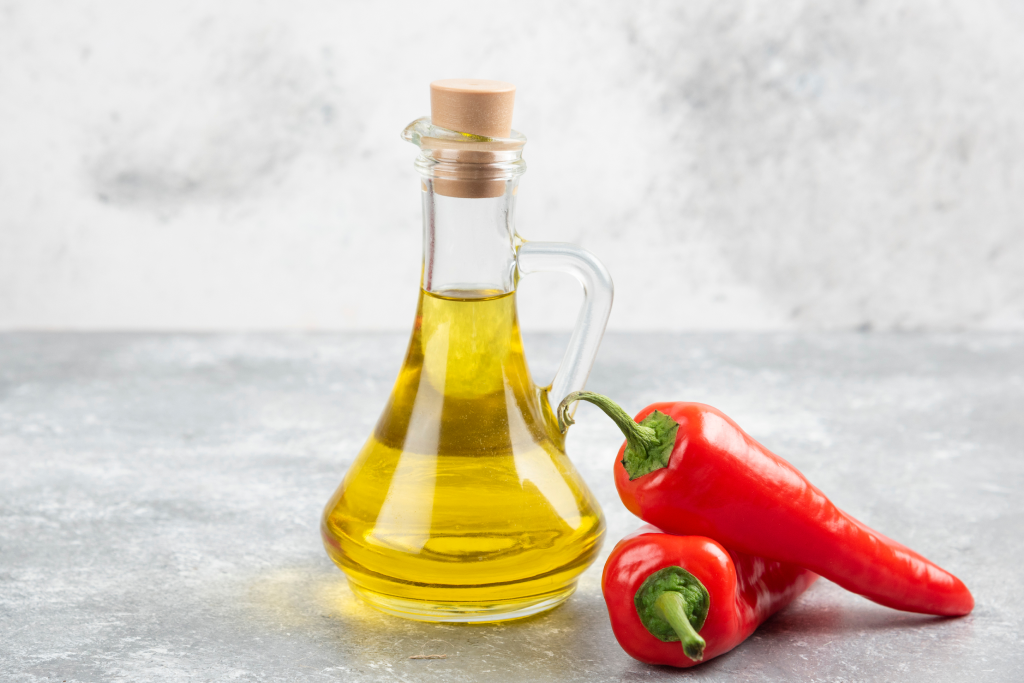
Chili oleoresin is a concentrated liquid extract from Capsicum species - the most commercially versatile format for incorporating consistent, measurable pungency and natural red-orange colour into food products at industrial scale. Also called capsicum oleoresin, it is described in peer-reviewed literature as the natural liquid extract that inherits all the properties and functional aspects of chili pepper’s bioactive content stored within the resin fraction - the ‘liquid spice’ of food manufacturing. PMC research confirms that the consortium of capsaicinoids, carotenoids, and phenolic compounds is commonly used in the food, pharmaceutical, and cosmetics industries.
For food manufacturers, specifying chili oleoresin over ground chilli powder resolves the primary production challenge of pungency variability: capsaicin content in raw chilli ranges from 0.1% to over 1% depending on cultivar, growing region, and post-harvest handling. Chili oleoresin standardised to a defined capsaicin content delivers predictable heat at every batch. Supercritical fluid extraction is transforming the food and beverage industry, and chili oleoresin is one of the spice categories where CO2 extraction offers the most significant performance advantage.
Chili Oleoresin Active Compounds: Capsaicinoids and Carotenoids
Chili oleoresin contains two distinct compound classes that determine its value in food applications. ScienceDirect research confirms that the primary capsaicinoids in chili pepper are capsaicin (69%), dihydrocapsaicin (22%), nordihydrocapsaicin (7%), homodihydrocapsaicin (1%), and homocapsaicin (1%).
The two key compound classes:
- Capsaicinoids (pungency compounds): capsaicin and dihydrocapsaicin together account for 91% of the heat. The Scoville Heat Unit (SHU) value of the oleoresin reflects the capsaicinoid concentration. Industrial food manufacturers specify oleoresin by capsaicin content percentage or SHU value, allowing precise, consistent heat delivery at low addition levels.
- Carotenoids (colour compounds): capsanthin, capsorubin, and beta-carotene provide the red-orange colour. These are the same carotenoids found in paprika oleoresin, and their colour value is measured in ASTA units. Chili oleoresin produced from coloured pepper varieties delivers both pungency and colour; varieties with higher capsaicin content typically have lower carotenoid concentrations.
Beyond pungency and colour, ScienceDirect research confirms that capsaicin exhibits documented biological properties including inhibition of acid secretion, stimulation of alkali and mucus secretion, and gastric mucosal blood flow contribution, with extensive research into its applications beyond food flavouring.
Chili Oleoresin Manufacturing: Extraction Methods and Process Steps
Method | Conditions | Output | Key Consideration |
Solvent extraction (hexane/acetone) | Ambient to mild heat; desolventisation step | Deep red, viscous oleoresin; high yield | Standard industrial route; residue testing required; not clean-label |
Ethanol extraction | Food-grade ethanol; ambient temperature | Food-permitted oleoresin; clean-label eligible | Lower yield than hexane; solvent removal required |
Supercritical CO2 (SC-CO2) | ~40°C, 200–350 bar; oxygen-free | Residue-free; selectable capsaicin/carotenoid profile by pressure staging | Zero residue; highest purity; good perspective for industrial application (confirmed by ScienceDirect) |
Ultrasound-assisted extraction (UAE) | Ethanol + ultrasound 0.30–1.00 W/mL; 3–17 min | Comparable or superior antioxidant activity; faster than conventional | Emerging industrial route; proven in peer-reviewed optimisation research |
The industrial pre-processing sequence before any of these extraction routes: spice extraction methods confirm that optimal extraction efficiency requires dried, correctly milled chili feedstock. The sequence is: Sort and clean dried chili pods (remove foreign matter, aflatoxin-risk material) → Dry to 5–12% moisture (as specified in patent literature for optimised capsaicin and capsanthin extraction) → Mill to 20–40 mesh particle size for solvent extraction, or finer for SC-CO2 → Extract → Desolventise → Collect and standardise to capsaicin content.

Where Buffalo Extraction Systems Fits In
Buffalo Extraction Systems manufactures the biomass pre-processing line for chili pod preparation and the supercritical CO2 extraction system for premium chili oleoresin production. The pre-processing line delivers dried, milled chili feedstock at 8–10% moisture at 65–70°C with Rotronic XB20 humidity sensing, VSD-controlled 2,000–4,000 RPM grinding to extraction-contact particle size, and 3-mesh vibro sifter separation before extraction entry. The CO2 extraction system operates at ~40°C and 200–350 bar in an oxygen-free environment, producing a residue-free chili oleoresin with selectable capsaicin and carotenoid fractionation by pressure staging. Three capacity scales - 200, 500, and 1,000 kg/hr dry output, with footprints from 25×17.15×5.5 m at 90 kW (200 kg/hr) to 50×22×6 m at 260 kW (1,000 kg/hr) - match pilot to full-scale chili oleoresin production. All contact surfaces are SS304 food-grade; dryer belt is food-grade PTFE mesh.
Pre-Processing the Chili Processing Plant
A chili processing plant for oleoresin manufacturing requires the same pre-processing infrastructure as other spice oleoresin facilities: sorting conveyor with collection bin, drying system, size reduction (grinding), sifting, and extraction. The Buffalo Extraction Systems pre-processing line delivers dried, milled chili feedstock at 200, 500, or 1,000 kg/hr dry output - matching pilot through industrial production volumes.
The dryer operating at 65–70°C with Rotronic XB20 humidity sensing brings dried chili pods to the 8–10% moisture specification that maximises extraction solvent efficiency. The VSD-controlled fine grinder at 2,000–4,000 RPM produces the extraction-contact particle size; the 3-mesh vibro sifter removes oversized fragments before extraction. Chili processing plant cost for the pre-processing component at 200 kg/hr scale involves a footprint of 25 m × 17.15 m × 5.5 m at 90 kW total power; at 1,000 kg/hr scale, 50 m × 22 m × 6 m at 260 kW.
For manufacturers evaluating SC-CO2 as the primary extraction route, the guide to the supercritical fluid extraction process for spice extraction explains the pressure-temperature staging that allows separate collection of capsaicin-rich and carotenoid-rich fractions from the same chili feedstock.
Food Manufacturing Applications of Chili Oleoresin
- Sauces and condiments (hot sauce, sriracha, chili sauce, ketchup): chili oleoresin provides consistent heat and colour at 0.1–0.5% addition levels, replacing variable ground chilli in production-scale sauce manufacturing.
- Processed meats (sausages, salami, pepperoni): delivers precise pungency and colour without particle texture or moisture issues from ground spice.
- Snack food seasonings (chips, extruded snacks, popcorn): oil-soluble format disperses evenly in seasoning oil systems for consistent heat across every piece.
- Ready meals, soups, and marinades: colour and heat stability under heat processing conditions where ground chilli would oxidise and fade.
- Pharmaceutical and nutraceutical applications: standardised capsaicin preparations for topical pain management products and dietary supplements targeting metabolism and thermogenesis.
PMC research confirms that capsaicinoids do not degrade over time under normal storage conditions - a key stability advantage for chili oleoresin over ground spice in long-shelf-life food products.
Conclusion
Chili oleoresin is the industrial format that delivers consistent, measurable heat and colour from Capsicum at the addition levels that food manufacturing requires. The extraction method determines whether the oleoresin is residue-free for clean-label applications, and whether the capsaicin and carotenoid fractions can be separately collected for applications that require one but not the other. SC-CO2 extraction allows this fractionation with zero solvent residue; solvent extraction delivers higher throughput at lower capital cost but carries residue obligations. The chili processing plant pre-processing quality - moisture specification, particle size, and aflatoxin exclusion - is what allows the extraction system to hit its capsaicin and colour standardisation targets.
The food processing industry’s shift toward consistent, standardised ingredients over variable raw spices is one of the key market drivers for chili oleoresin. When a sauce manufacturer targets a defined Scoville profile - say, 2,000 SHU for a mild hot sauce or 50,000 SHU for a specialty product - chili oleoresin allows that specification to be hit repeatably across production runs, independent of the capsaicin variation in the raw chili supply. This is the operational advantage that drives adoption from artisanal food brands moving to commercial production all the way to multinational sauce manufacturers managing global supply chains. The extraction method and standardisation protocol are what make this possible; the pre-processing line quality is what makes it sustainable.
Frequently Asked Questions
What is chili oleoresin?
Chili oleoresin is a concentrated liquid extract from Capsicum species containing capsaicinoids (capsaicin, dihydrocapsaicin, and others providing pungency) and carotenoids (capsanthin, capsorubin providing red-orange colour). It is standardised to capsaicin content (expressed as % or SHU) for precise, consistent heat delivery in food manufacturing. Also called capsicum oleoresin or liquid spice, it replaces ground chilli where batch-to-batch pungency consistency is required.
What is the spice extraction process for chili oleoresin?
Industrial chili oleoresin extraction: dry chili pods to 5–12% moisture, mill to 20–40 mesh particle size, extract with solvent (hexane, acetone, or food-grade ethanol), desolventise, and standardise to capsaicin content. SC-CO2 extraction at ~40°C and 200–350 bar produces a residue-free oleoresin with selectable capsaicin/carotenoid profile via pressure staging. Ultrasound-assisted extraction is an emerging industrial route with comparable or superior antioxidant activity.
What is capsaicin extraction from chili and how is it used?
Capsaicin extraction from chili involves separating the capsaicinoid fraction from chili pepper matrix using solvents or CO2. The primary capsaicinoids - capsaicin (69%) and dihydrocapsaicin (22%) - together provide 91% of the heat. Extracted capsaicin is used in standardised oleoresin for food manufacturing, in pharmaceutical topical pain management products, and in nutraceutical metabolism and thermogenesis supplements.
What are the main food manufacturing applications of chili oleoresin?
Main applications: hot sauces and condiments (consistent heat at 0.1–0.5%), processed meats (pungency without particle texture), snack food seasonings (even dispersion in oil-based seasoning systems), ready meals and soups (heat and colour stability under processing), and pharmaceutical/nutraceutical capsaicin preparations. Capsaicinoids’ stability under normal storage conditions gives chili oleoresin a shelf-life advantage over ground chilli.
What is chili processing plant cost and what equipment is required?
A chili processing plant for oleoresin production requires: sorting conveyor, drying system (65–70°C with humidity sensing), grinding equipment (VSD-controlled), sifter, extraction system (solvent extractor and evaporator, or SC-CO2 vessel), and standardisation/packing. At 200 kg/hr dry output, the pre-processing line footprint is 25 m × 17.15 m × 5.5 m at 90 kW total power. At 1,000 kg/hr, the footprint is 50 m × 22 m × 6 m at 260 kW.