The Real Cost of Getting Cleaning Validation Wrong
Cleaning validation extraction equipment failures are among the most common findings in GMP pharmaceutical and nutraceutical inspections - and among the most expensive to remediate. FDA warning letter data on cleaning validation failures consistently shows cleaning failures in the top five inspection deficiency categories for botanical extract and dietary supplement manufacturers. A failed cleaning validation does not mean redoing a study - it means quarantining all product manufactured since the last valid cleaning validation, investigating potential contamination, and notifying customers if affected product has shipped.
The extraction equipment cleaning GMP requirement exists because multi-product and multi-species extraction facilities share equipment between products. Without a validated cleaning programme, you cannot demonstrate to any regulated buyer or inspector that product A does not contaminate product B. Hygienic design and cGMP compliance for pharmaceutical CO2 extraction explains the equipment design features - SS316L surfaces, no dead legs, CIP compatibility - that make cleaning validation achievable from day one.
What Cleaning Validation Must Demonstrate
EU GMP Annex 15 on qualification and validation requires cleaning validation to demonstrate: (1) removal of previous product residue to below a defined limit; (2) removal of cleaning agent residue; and (3) prevention of microbial contamination from the cleaning process itself. All three must be demonstrated consistently - not once but typically across three consecutive cleaning cycles.
What cleaning validation does not demonstrate: it does not prove the equipment is clean after every cleaning cycle in routine production. It proves that your defined cleaning procedure, followed exactly as written, produces a clean result. Any deviation from the validated procedure - lower cleaning agent concentration, shorter contact time, inadequate rinse temperature - is not covered by the validation.

The extraction cleaning SOP validation and the extraction cleaning SOP itself must be identical in the parameters they describe. Validation teams who run the ideal version of the cleaning procedure and then operations teams who implement a simplified version of the SOP create a gap that renders the validation invalid - without anyone necessarily realising it until an inspection.
MACO Calculations: Setting Scientifically Defensible Limits
Before extraction cleaning acceptance criteria can be set, the MACO (Maximum Allowable Carryover) calculation establishes how much Product A residue is acceptable in one batch of Product B. The MACO calculation extraction approach determines the maximum carryover that would not affect the safety or efficacy of the next product.
The standard MACO calculation extraction formula: MACO = (NOAEL or minimum therapeutic dose of Product A × batch size of Product B) ÷ (maximum daily dose of Product B × safety factor). For botanical extracts where pharmacological data is limited, using 0.1% of the minimum therapeutic dose of Product A is widely accepted as a conservative starting position.
Once the MACO is calculated, and the extraction equipment cleaning GMP limits are established, the extraction cleaning acceptance criteria derive from it: MACO is converted to a surface concentration limit (μg/cm²) by dividing by the total product-contact surface area of the equipment, and then to a swab recovery limit (μg/swab) based on the defined swab area - typically 25 cm². These derived extraction cleaning acceptance criteria are what swab test results are compared against, not arbitrary percentage limits.
How BES ensures GMP compliance from equipment design through validation covers how SS316L surfaces, CIP-compatible design, and no dead-leg pipework reduce the total product-contact surface area that MACO calculations must account for - directly reducing the cleaning validation burden.
Swab Testing: What It Proves and the Three Things Most Labs Miss
Swab testing is the primary analytical method for verifying cleaning validation extraction equipment programmes are effective. A swab test extraction cleaning result tells you how much residue (in μg) was recovered from a defined surface area at a defined sampling location after a defined cleaning procedure. Getting results that are scientifically defensible requires three things that most facilities either skip or underestimate:
- Worst-case location selection: swab samples must be taken from the locations where residue is most likely to persist. For extraction vessels, these typically include the vessel outlet, valve internals or dead-leg connections, the vessel base where material settles, and any surface irregularities. The rationale for worst-case location selection must be documented. Sampling easy-to-reach locations and calling them worst-case is a finding inspectors make regularly.
- Swab recovery validation: before results can be used in a cleaning validation, the recovery of residue from the specific surface material - SS316L, PTFE, glass - using your swab type and technique must be validated. SS316L recovers differently from glass. An uncorrected recovery factor gives results that either understate or overstate the actual surface residue. This is one of the most common cleaning validation gaps in extraction facilities.
- Analytical method limit of quantitation: the method used to analyse the swab - HPLC for specific residue, TOC (Total Organic Carbon) for non-specific - must be validated with a limit of quantitation below the extraction cleaning acceptance criteria. If your method cannot reliably detect residue at the acceptance limit, your swab test extraction cleaning result cannot demonstrate compliance.
CIP Systems: What GMP Validation Requires Beyond Normal Commissioning
A CIP (Clean-in-Place) extraction system GMP approach automates the cleaning procedure - circulating cleaning solution, rinse water, and sanitant through equipment without disassembly. A CIP extraction system GMP programme significantly reduces cleaning variability compared to manual cleaning, which is operator-dependent and inconsistently reproducible. But validating a CIP system requires additional verification beyond standard commissioning:
- Spray ball coverage: for CIP systems using spray balls or rotating heads, you must demonstrate that cleaning solution reaches all product-contact surfaces including worst-case locations. Riboflavin testing - spraying a riboflavin solution and inspecting surfaces under UV light - is the standard method. Surfaces not reached by the riboflavin solution will not be cleaned by the CIP cycle.
- Flow and pressure at worst-case points: the CIP extraction system GMP programme requires that defined flow rate and pressure are achieved at the most distant point in the system from the pump - not just at the pump outlet. Pressure and flow monitoring logged by SCADA during validation runs provides this evidence.
- Cycle parameter reproducibility: the same cleaning parameters - agent concentration, temperature, contact time, flow rate, rinse volume - must be reproducibly achieved across all three validation cycles. SCADA data from each CIP validation run is the evidence of cycle parameter compliance across runs.
Why Your SOP and Your Validation Must Tell the Same Story
The extraction equipment cleaning GMP standard across EU GMP, FDA, and WHO GMP all require that cleaning procedures are validated, documented, and followed exactly as written. WHO GMP guidance on cleaning validation is explicit that the extraction equipment cleaning GMP programme must cover all shared equipment and that results must be retained as permanent GMP records.
The extraction cleaning SOP is the operational document your operators follow for every cleaning cycle. The extraction cleaning SOP validation - the cleaning validation study - proves this SOP, when followed as written, produces a clean result. The relationship is inseparable: if the extraction cleaning SOP validation was conducted with different parameters than what the SOP now specifies, the validation no longer covers what operators are doing.
The control mechanism is change control. Any change to the extraction equipment cleaning procedure - different cleaning agent, lower concentration, shorter contact time, different temperature - must go through a documented change control assessment. The assessment determines whether the cleaning validation extraction equipment programme must be partially or fully repeated before the changed procedure is used in production.
How manufacturers can optimise extraction recipes across different raw material batches explains how validated process recipes connect to cleaning validation - when a recipe changes, the cleaning validation must be reassessed through change control.
For manufacturers scaling from pilot to commercial production, the cleaning validation programme must scale with the equipment. Scaling from lab to industry: choosing the right extraction equipment size covers how equipment scale affects the product-contact surface area and MACO calculations in your cleaning validation extraction equipment programme.
Where Buffalo Extraction Systems Fits In
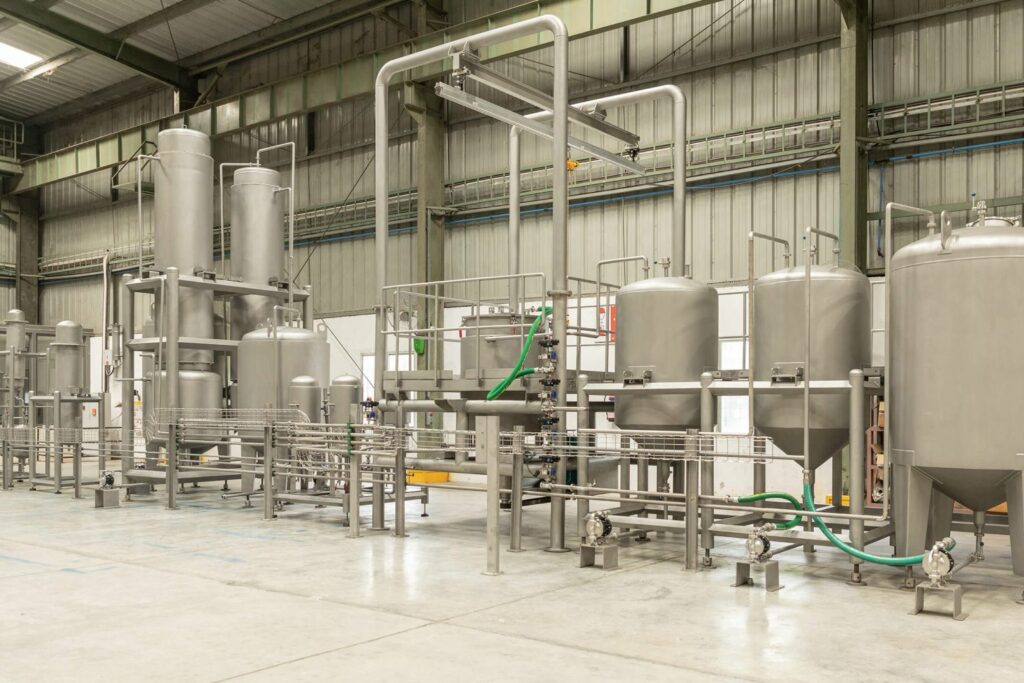
Buffalo Extraction Systems manufactures extraction equipment with SS316L product-contact surfaces, no dead-leg pipework, and CIP-compatible design - the three features that directly reduce cleaning validation complexity. SS316L eliminates surface porosity that traps residue. No dead legs means cleaning solution reaches every internal contact surface. CIP compatibility enables automated, SCADA-monitored cleaning with reproducible cycle parameters across every cleaning cycle. Three capacity scales at 200, 500, and 1,000 kg/hr dry output.
Conclusion
Cleaning validation extraction equipment programmes built on solid extraction equipment cleaning GMP principles prove what equipment design makes possible: that every product-contact surface can be cleaned to a defined, analytically confirmed limit after every campaign. The MACO calculation sets the science-based extraction cleaning acceptance criteria. Swab testing with validated recovery and a validated analytical method proves those criteria are met. The CIP extraction system GMP validation confirms that automation delivers the cycle consistently. And change control protects the link between the validated procedure and what operators actually do. Get these four elements right and your cleaning validation programme will survive any inspection - because it is built on evidence, not assumption.
Frequently Asked Questions
What is cleaning validation for extraction equipment?
Cleaning validation extraction equipment programmes demonstrate - with analytical evidence across three consecutive cleaning cycles - that the cleaning procedure consistently removes previous product residue, cleaning agent residue, and microbial contamination from all product-contact surfaces to below the MACO-derived extraction cleaning acceptance criteria. Required by EU GMP Annex 15 and FDA for any facility where extraction equipment is shared between products or botanical species.
How do MACO calculations work for extraction equipment cleaning?
The MACO (Maximum Allowable Carryover) calculation determines the maximum amount of Product A residue acceptable in one batch of Product B. Formula: (NOAEL or min therapeutic dose of Product A × batch size B) ÷ (max daily dose B × safety factor). For botanical extracts, 0.1% of min therapeutic dose is a widely accepted starting position. The MACO is then converted to a surface limit (μg/cm²) and a swab recovery limit (μg/swab) - these are the extraction cleaning acceptance criteria.
What does swab test extraction cleaning involve?
Swab sampling from worst-case surface locations (vessel outlet, valves, base, irregularities) using a swabbing technique and swab type whose recovery from the specific surface material (SS316L, PTFE) has been pre-validated. Results analysed by HPLC or TOC with a limit of quantitation below the extraction cleaning acceptance criteria. Results reported as μg per 25 cm² area sampled.
What is a CIP extraction system GMP validation?
Validation of the clean-in-place automated cleaning system for extraction equipment. Requires: spray ball coverage verification (riboflavin/UV method), flow and pressure verification at the most distant point from the pump, and cycle parameter reproducibility (cleaning agent concentration, temperature, contact time, rinse volume) confirmed across three validation cleaning cycles by SCADA data logging.
What happens if the cleaning SOP changes after validation?
Any change to the extraction equipment cleaning procedure must go through documented change control. The assessment determines whether the cleaning validation extraction equipment programme must be partially or fully repeated before the new procedure is used in production. Running an unvalidated cleaning procedure - even one that seems more effective - is a GMP deficiency if cleaning validation was conducted on the previous procedure.