Supercritical Extraction Ginger and Its Role in Sustainable Agricultural Practices
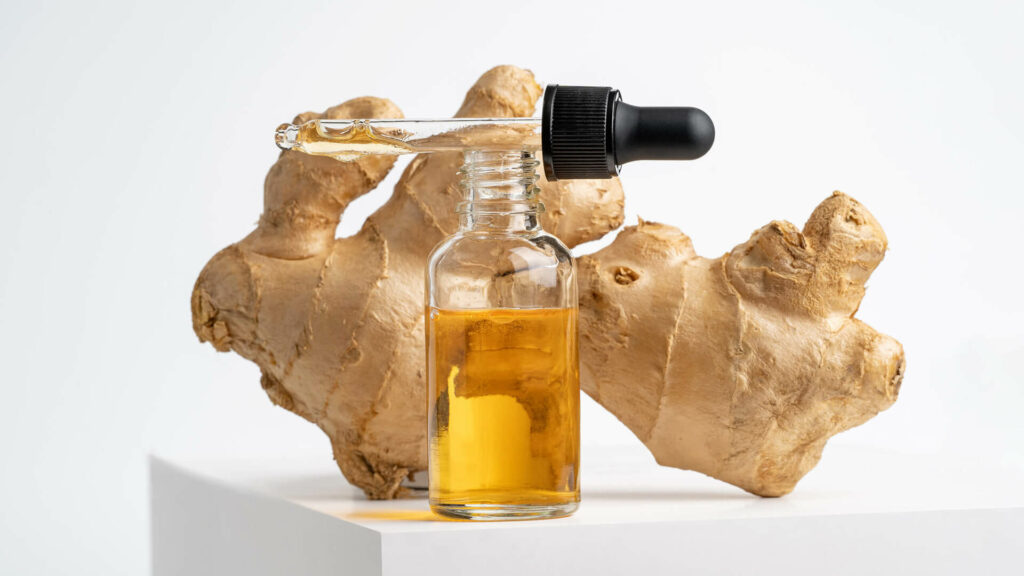
The transition to sustainable ingredient sourcing is one of the defining challenges of modern food and pharmaceutical manufacturing. Supercritical extraction ginger - the process of applying supercritical CO2 fluid technology to ginger rhizome - sits at an interesting intersection: it is both a premium production technology and an inherently sustainable processing method. Understanding this connection is increasingly important for manufacturers building supply chains that meet ESG commitments and evolving regulatory expectations.
Ginger Agriculture: The Sustainability Challenge
Ginger (Zingiber officinale Roscoe) is a tropical crop grown predominantly across South and Southeast Asia, West Africa, and South America. India, accounting for nearly 40% of global ginger production, produces the majority of rhizomes destined for global extract markets.
Conventional ginger extraction, particularly hexane-based solvent extraction, raises several sustainability concerns:
- Solvent waste: Hexane and other organic solvents require extensive recovery, wastewater treatment, and disposal infrastructure - all carrying high environmental cost.
- Energy intensity: Distillation-based extraction methods are thermally intensive, contributing to high per-unit carbon emissions.
- Biomass utilisation: Many conventional processes fail to utilise spent biomass efficiently, creating solid waste disposal challenges.
These concerns are increasingly relevant given regulatory pressure in major markets. The EU's Farm to Fork Strategy explicitly targets solvent reduction in food processing, while US FDA clean-label expectations are raising scrutiny on residual solvent declarations.
Supercritical CO2 Extraction: The Green Alternative
Supercritical extraction ginger using CO2 addresses each of these sustainability pressure points directly. CO2 is a naturally occurring, non-toxic, non-flammable solvent that requires no disposal. Our article on why CO2's non-flammable nature is a key safety advantage provides relevant context.
- Zero Solvent Residues: The extracted fresh ginger extract is free of any solvent residue - no wastewater treatment for solvent recovery is required.
- Lower Thermal Load: CO2 extractions are conducted at 35–65°C compared to steam distillation at 100°C+, preserving heat-sensitive bioactives including geraniol and neral.
- CO2 Recirculation and Recovery: Modern supercritical extraction systems achieve recovery rates exceeding 95%. See how high-capacity CO2 recirculation systems reduce operational costs.
- Spent Biomass Valorization: After supercritical extraction, the depleted ginger biomass retains significant dietary fiber content and can be redirected to animal feed, composting, or further processing streams - supporting a circular economy approach.
The Farm-Level Connection
The sustainability argument for supercritical extraction ginger extends upstream to agricultural practice. Because CO2 extraction achieves efficient bioactive recovery at relatively low material-to-solvent ratios, the effective utilization rate per kilogram of raw rhizome is higher than conventional methods:
- Less raw ginger is required to produce an equivalent quantity of standardized extract.
- Lower raw material demand per output unit reduces pressure on agricultural land.
- The premium pricing for CO2-extracted ginger creates economic incentive for farmers to invest in quality cultivation, including proper curing, controlled drying, and aflatoxin management.

Organic Ginger and Supercritical Extraction: A Natural Partnership
The organic ginger production segment is growing rapidly. Supercritical CO2 extraction is uniquely well-suited to organic ginger processing:
- CO2 is accepted as a processing aid under organic certification frameworks in the EU (EC 889/2008) and the USA (NOP standards), meaning CO2-extracted products from certified organic raw material can retain organic status.
- The process introduces no chemical contamination risk that could compromise organic certification.
- The absence of solvent residues in the final product is fully aligned with organic product authenticity claims.
Lifecycle Perspective: Ginger Extraction Methods Compared
A structured lifecycle comparison of the best way to extract ginger from a sustainability perspective - expanded here to include regulatory compliance dimensions that are increasingly decisive for market access:
Criterion | Steam Distillation | Solvent Extraction | Supercritical CO2 |
Solvent residue in product | None | Potential trace | None |
Energy intensity | High | Medium | Low–Medium |
Solvent waste generated | Water/steam | Organic solvent | None |
Bioactive preservation | Poor | Moderate | Excellent |
Organic-compatible | Yes | No | Yes |
CO2 recoverability | - | - | >95% |
EU Directive 2009/32/EC compliant | Yes | Conditional | Yes |
Suitable for pharma-grade extract | No | Conditional | Yes |
How to read this table: Each row represents a sustainability or regulatory criterion that extraction operators face when selecting a processing method. 'Supercritical CO2' is the only column that achieves a positive or optimal rating across all nine criteria - reflecting its unique positioning as both the cleanest and most regulatory-compatible extraction technology for fresh ginger extract and full-spectrum oleoresin production.
For manufacturers making the investment decision, choosing the right extraction equipment size is the first step toward operationalizing a sustainable, high-output ginger extraction facility.
Regulatory and Market Alignment
The alignment between supercritical extraction ginger and emerging sustainability regulation is increasingly commercially significant. The EU Green Deal, US FDA clean-label expectations, and Asia-Pacific food safety frameworks are all trending toward preferring solvent-residue-free botanical extracts. Our broader analysis of how supercritical fluid extraction is transforming the food and beverage industry places ginger in the wider market context.
Conclusion
Supercritical extraction ginger is not simply a processing technology choice - it is an investment in supply chain sustainability, regulatory futureproofing, and market positioning. For manufacturers seeking to buy ginger extract for the most demanding applications, or for producers evaluating the best way to extract ginger at industrial scale, supercritical CO2 extraction delivers the most defensible combination of extract quality, environmental performance, and market compatibility.
FAQs
Q: Is CO2 extraction considered environmentally sustainable for ginger?
A: Yes. Supercritical CO2 extraction generates no solvent waste, uses recyclable CO2 in a closed-loop system with recovery rates above 95%, operates at lower temperatures than distillation, and leaves spent biomass that can be repurposed - making it the most sustainable commercial ginger extraction method.
Q: Can CO2-extracted ginger oil retain organic certification?
A: Yes. CO2 is approved as a processing aid under organic certification frameworks in both the EU (EC 889/2008) and the USA (NOP standards). Ginger processed with supercritical CO2 from certified organic rhizome can retain its organic certification status.
Q: What is the best way to extract ginger for pharmaceutical applications?
A: Supercritical CO2 extraction is the gold standard for pharmaceutical applications due to its solvent-free profile, GMP compliance compatibility, ability to standardize gingerol content, and full preservation of thermally sensitive bioactive compounds.
Q: How does supercritical extraction improve ginger raw material utilization?
A: CO2 extraction achieves superior bioactive recovery per kilogram of raw rhizome compared to conventional methods, meaning less raw material is needed to produce an equivalent amount of standardized extract - improving both economics and resource efficiency.
Q: Where can manufacturers buy ginger extract produced by CO2 extraction?
A: Manufacturers seeking to buy ginger extract produced by certified supercritical CO2 systems should look for suppliers with GMP, CE, and ASME-certified equipment. Buffalo Extraction Systems provides complete turnkey supercritical CO2 extraction solutions for ginger and other botanical raw materials.