How Much Does a CO2 Extraction Machine Cost in the US? (2026 Price Guide)
What does a CO2 extraction machine cost? It is the first question every buyer asks and the hardest to get a straight answer to. A supercritical CO2 extraction system is a capital purchase, and the price depends on how the system is configured, so vendors tend to deflect to "it depends." This guide gives you the real starting point, explains what moves the number up or down, and maps the full project budget beyond the machine itself, so you can plan a US CO2 extraction investment with eyes open.
How Much Does a CO2 Extraction Machine Cost? The Short Answer
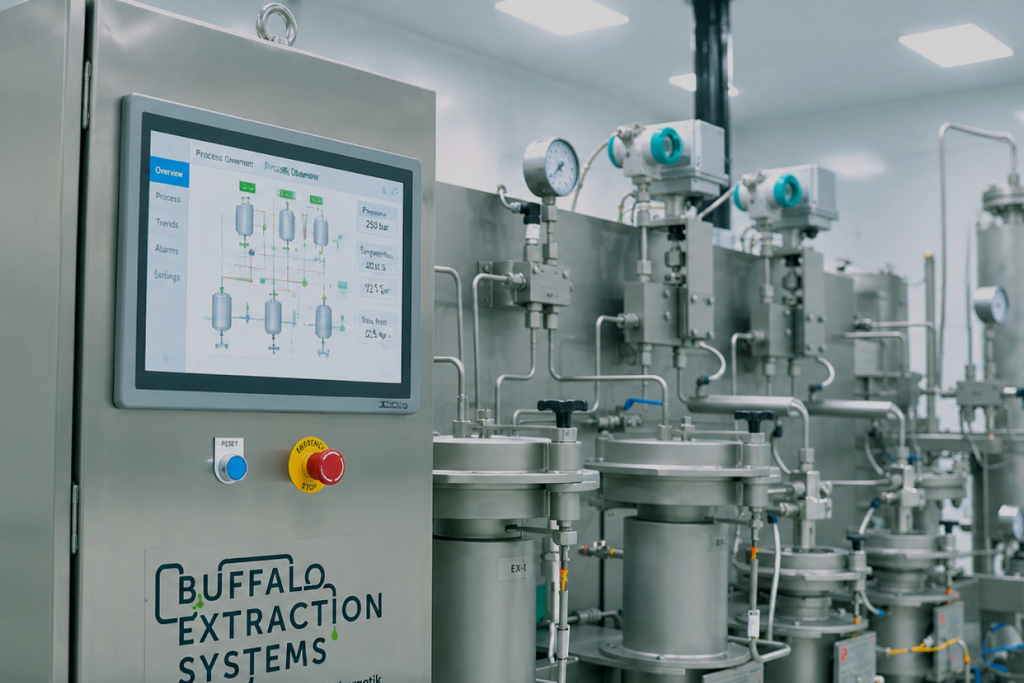
A supercritical CO2 extraction machine from Buffalo Extraction Systems (BES) starts from approximately $285,000 in the US, ex-works. Price rises with extractor size, pressure rating (350 or 600 bar), automation, certifications and optional equipment. Total project cost is higher once facility, installation, utilities and training are added.
That supercritical CO2 extraction system cost of approximately $285,000 applies to a BES unit ex-works, before freight, import duties and installation. This is the entry point for a smaller, pilot-scale system; the figure rises from there with extractor size, pressure rating, automation and the certifications your market requires. A cryogenic ethanol extraction system generally starts lower than a comparable CO2 system. Those are equipment starting points, and the total project cost, covering facility, installation and the rest, is higher, which the budget section below breaks down.
Because the system is built to your product and throughput rather than sold as a fixed box, the honest way to read that number is as a floor, not a sticker price. What follows is how to think about where your own configuration lands.
What Factors Drive CO2 Extraction Machine Cost?
Six factors move a CO2 extractor price more than anything else. Understanding them lets you see why two quotes can differ and where your own requirements sit.
| Cost driver | How it moves the price |
|---|---|
| Extractor size and configuration | The biggest lever. Systems scale from pilot-scale Level 1 (10 or 15 L) and mid-scale Level 2 (50 or 75 L) units up to production-scale Level 3 (200 or 300 L) extractors, in multi-vessel configurations. Larger vessels and more of them cost more. |
| Pressure envelope (350 vs 600 bar) | A 600 bar (about 8,700 psi) system costs more than a 350 bar (about 5,075 psi) system; you pay for the higher-rated vessels and pumps only if your compounds need them. |
| Automation and controls | SCADA recipe control, remote monitoring and data-integrity features (21 CFR Part 11 support) add capability and cost. |
| Certifications | ASME (U/U2 stamp) for pressure vessels and UL-listed electrical panels are what US buyers typically need; where an ethanol co-solvent is used, the co-solvent area may need an NEC Class I hazardous-location rating. PED, ATEX and CE apply to EU sites. All are configured at the order stage, at additional cost. |
| Optional equipment | An ethanol co-solvent system to reach more polar actives, extra separators for fractionation, and similar options each add to the base. |
| Scale of fractionation | Dual-separator fractionation and finer process control raise capability and price. |
This is also why a higher number is not automatically a better buy: it reflects a wider operating range or more capability, which only earns its place if your products need it. Our guide on how to choose the right supercritical CO2 extraction system walks through matching configuration to what you actually make.
Why Do CO2 Extraction Machine Prices Vary So Much?
Search for CO2 extraction machine prices and you will see imported and used listings under $50,000 next to production systems priced in the hundreds of thousands. The gap is real, but the systems are rarely comparable. Lower-priced units often differ in maximum pressure rating, in whether the pressure vessels carry an ASME U or U2 stamp, in whether the electrical panels are UL-listed, and in how much of the process is automated. Parts availability and access to US-based service also vary widely. Before comparing headline numbers, line up each quote against the same specification: vessel size, pressure, certifications, automation and support. Only then does a price comparison tell you anything useful.
Not sure where your requirements land? Get a Price for Your Configuration and we will scope a system to your product, throughput and certification needs.
Is the Quoted Price the Full Project Cost or Just the Equipment?
This is where budgets go wrong. The quoted CO2 extraction equipment cost covers the machine, not the plant. A working extraction operation costs more than the extractor, because the machine is one stage of a plant. Beyond the system itself, a realistic US project budget should allow for:
- Installation and commissioning
- Facility and civil work (building, cleanroom, utilities infrastructure)
- Utilities (power, cooling water, compressed air)
- Ocean freight, US customs clearance and import duties
- Certification and compliance
- Operator training
- Consumables and spares
These are the categories BES advises buyers to budget for alongside the machine. The civil construction itself is normally in your scope, carried out to the vendor's design.
If you would rather hold a single accountable scope across all of that, a turnkey extraction plant bundles the facility design, pre-processing, extraction, post-processing, installation and training under one vendor, which is a different commercial shape from buying the extractor alone.
What Does a CO2 Extraction System Cost to Run?
CO2 extraction operating cost is part of the real price, and CO2 is efficient here. In the supercritical CO2 extraction process, CO2 runs in a closed loop, which means it is captured and reused after every batch. Consumables stay low: you pay for periodic CO2 top-up to replace the small amount not recovered, plus routine seals and filters. The main ongoing cost is energy, from the high-pressure pump and the chiller, so the connected power load is worth comparing between systems. On labor, BES systems are designed to run with a single operator at pilot scale, with larger production systems typically adding a second. These are the levers that decide cost per batch once you are in production.
One cost that de-risks buying from an overseas manufacturer: BES supports US installations with in-region commissioning, operator training and service, so uptime does not depend on a technician flying in. (US service coverage to be confirmed before publishing.)
Is CO2 Extraction More Expensive Than Cryogenic Ethanol Extraction?
On CO2 vs ethanol extraction cost, buyers should know that a cryogenic ethanol system generally starts lower than a comparable supercritical CO2 system. But the methods are not interchangeable, and the right choice follows your product, not the sticker. CO2 leaves no residual solvent and tunes to specific fractions; cryogenic ethanol captures a broad, full-profile extract at volume using a food-grade solvent. Our guide on when to choose CO2 over cryogenic ethanol extraction covers where each one wins, including the running-cost differences.
Which Numbers Should You Use to Model CO2 Extraction ROI?
A price is only half the investment case; the other half is what the system produces. Rather than a generic payback claim, these are the operating assumptions worth building your own model on, drawn from how BES systems actually run: a plant typically operates around 250 to 320 days a year; a batch cycle runs anywhere from about 30 minutes to 6 hours depending on the raw material; and systems run with one operator at pilot scale, two at production scale. Your yield per batch, which depends heavily on your specific material, then drives the revenue side.
That last point is the one most buyers underestimate. Yield varies enormously by material, and even by batch, and it also depends on how you tune CO2 extraction parameters, so the single most useful thing you can do before committing capital is to test your raw material before buying extraction equipment. You can do that through a trial at BES Labs, which turns an ROI estimate into an ROI calculation grounded in your real numbers.
How Do You Get an Accurate CO2 Extraction System Price?
Because the system is configured to your product, the only truly accurate CO2 extraction system price is a quote built around your requirements: your target compound, your throughput, your pressure needs and your certification requirements. The fastest route to that is to tell BES what you are making and at what scale, ideally alongside a trial on your material so the sizing rests on measured yield. Explore the supercritical CO2 extraction machines range, then request a quote scoped to your operation.
Key Takeaways
In the US, CO2 extraction machine cost starts from approximately $285,000 for a supercritical system, and rises with extractor size, pressure envelope, automation, certifications and options. The system is the equipment, not the whole project, so budget separately for facility, installation, utilities, training and spares, and weigh the low running cost of a closed-loop CO2 system. Because both price and yield depend on your configuration and material, the accurate figure comes from a quote scoped to your operation and a trial on your own biomass.
Want a price scoped to your operation? Request a Quote and we will configure a system to your product, scale and compliance needs.
Frequently Asked Questions
What is the price of a CO2 extraction machine in the US?
In the US, a Buffalo supercritical CO2 extraction system starts from approximately $285,000 for a smaller, pilot-scale system. The figure rises with extractor size, pressure rating (350 or 600 bar), automation and certifications. That is the equipment starting point; the full project, including facility, installation and utilities, costs more.
What is the price difference between Level 1, Level 2, and Level 3 CO2 extraction systems?
BES Level 1, Level 2 and Level 3 systems map to extractor size and capacity, but price is quoted per configuration rather than as fixed Level price tiers, so there is no single Level 1, 2 or 3 price. Lab Level CO2 extraction systems cover research and pilot-scale work. For commercial systems, price scales with the extractor size and configuration chosen for your required output, which is why a requirements-based quote is the accurate way to compare.
What factors affect the price of a CO2 extraction system?
The main drivers are extractor size and configuration (the biggest lever), the pressure envelope (350 versus 600 bar), the level of automation and controls, the certifications required (ASME, PED, ATEX, CE), and optional equipment such as an ethanol co-solvent or extra separators for fractionation. Each adds capability and cost, so the right specification is the one matched to your products.
Is the quoted price for a CO2 system the total project cost or just the equipment?
The system price is the equipment. A working operation also needs installation and commissioning, facility and civil work, utilities, certification, operator training, and consumables and spares, so the total project cost is higher. The civil construction is normally in the buyer's scope. A turnkey extraction plant bundles these under one vendor if you prefer a single accountable scope.
What is the total startup cost of a commercial CO2 extraction operation?
Beyond the system starting from around $285,000, budget for facility and civil work, installation and commissioning, utilities, certification, training, and spares. The total depends heavily on whether you are building a new facility or equipping an existing one, so it is best planned as a project budget with the equipment as one line. A requirements-based quote and a facility design give you the real figure.
How does the cost of a CO2 extraction system compare to cryogenic ethanol extraction?
A cryogenic ethanol system generally starts lower than a comparable supercritical CO2 system. However, the methods suit different products: CO2 leaves no residual solvent and targets specific fractions, while cryogenic ethanol captures a broad, full-profile extract at volume with a food-grade solvent. The right choice follows your product and its running-cost profile, not the purchase price alone.
Are cheaper imported or used CO2 extraction machines worth it?
They can be, but only if they meet your requirements. Compare the pressure rating, vessel certification (ASME U or U2 stamp), UL-listed controls, parts and service availability, and whether the system can be validated for your market. The safest way to judge any machine is a trial on your own material and a quote scoped to the same specification.