CO2 Extraction System Levels Explained: Lab Level, Level 1, 2 and 3, and How to Match Capacity to Your Yield
If you have browsed supercritical CO2 extraction systems, you have seen them grouped into Lab Level and Level 1, 2 and 3. Each level is a capacity band tied to the scale of your operation, and within a band the system is configured to the yield you need rather than sold as a single fixed box. Only the Lab Level is a single fixed unit. This guide explains what each level band covers, how capacity scales underneath them, and how to work out which configuration fits your operation.
What the levels actually mean
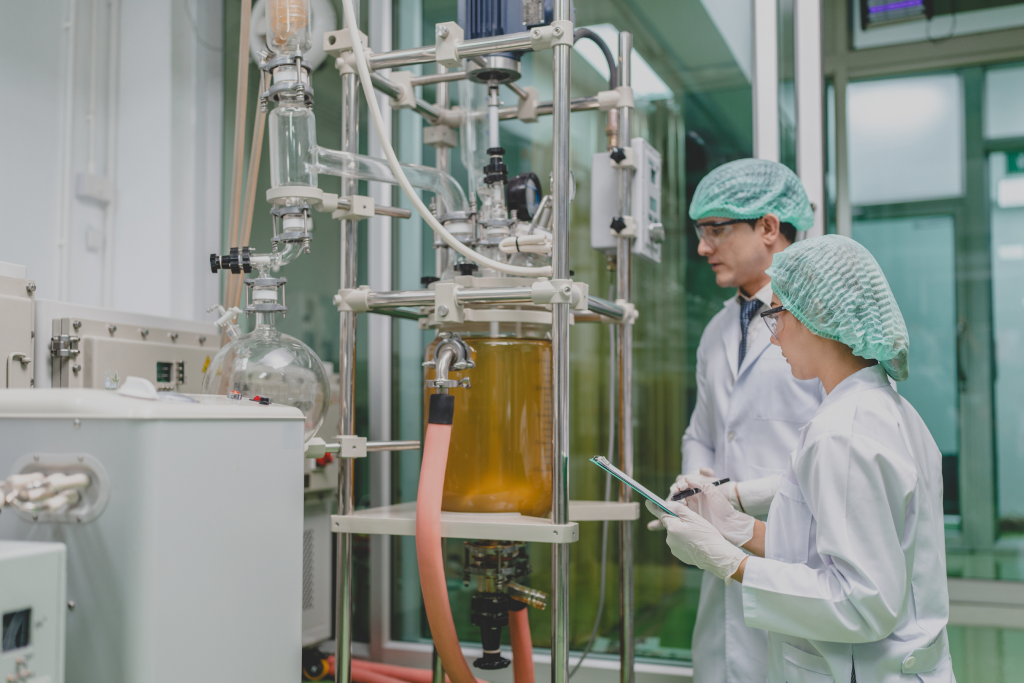
Start with the distinction that clears up most of the confusion. Lab Level is a specific, fixed system: a 5 litre single-extractor unit with three separators, which Buffalo uses in-house to run customer trials. It is the system your material is tested on before you buy, not a production line.
Levels 1, 2 and 3 are best understood as capacity bands rather than single fixed machines. Level 1 covers pilot and small commercial production, built around 5 litre-class extractors; Level 2 covers early commercial production, around 25 litre-class extractors; and Level 3 covers industrial production, using 100 litre extractors and above. Within each band, the exact extractor size, the number of vessels and the pressure rating are configured to the yield you need from your biomass. So the level tells you the scale, and the configuration inside it is matched to your output, which is why the precise specification depends on your material and target volume.
The capacity ladder underneath the levels
Underneath the level bands, the systems are built from a clear ladder of extractor sizes and configurations. This is the real capacity picture, and it is what each level is assembled from.
| Extractor volume | Configurations | Max CO2 pump flow | Level band / scale |
|---|---|---|---|
| 5 L | ×2 or ×3 | 45 LPH | Lab Level trial unit / Level 1 (pilot, small commercial) |
| 10 L | ×2 or ×3 | 90 LPH | Level 1 (pilot, small commercial) |
| 25 L | ×2 or ×3 | 150 LPH | Level 2 (early commercial) |
| 100 L | ×2 or ×3 | 500 LPH | Level 3 (industrial) |
| 300 L | ×2 or ×3 | 2,000 LPH | Level 3 (industrial) |
Two more variables sit on top of extractor size. The pressure envelope is either 350 bar (about 5,075 psi) or 600 bar (about 8,700 psi), chosen for the compounds you are extracting rather than for scale. And the number of extractors and separators in a configuration affects both throughput and your ability to fractionate. So a given level is really a combination of extractor volume, configuration, and pressure envelope, matched to what you need to produce.
How your required yield decides the configuration
Because the level is configured to output, the sizing conversation runs backward from your goal, not forward from a catalog. The key inputs are your target compound, how much finished extract you need per day or per year, the yield your specific biomass gives, and how many days a year you plan to run. A plant typically operates around 250 to 320 days a year, and a batch cycle runs from roughly 30 minutes to 6 hours depending on the material, so those figures turn a target output into a required throughput, which in turn points to an extractor size and configuration.
The variable that most affects this, and the one buyers most often guess at, is yield, because it varies widely by material and even by batch. That is why the honest way to land on the right level is to measure your material first rather than map yourself to a tier. Our guide on how to choose the right CO2 system walks through the full sizing logic.
What moving up a level adds
Scaling up from a smaller configuration to a larger one adds throughput, the capacity to process more biomass in the same window, and it does so by moving to larger or more numerous extractors with higher CO2 pump flow. It is not a different process; it is the same supercritical CO2 extraction at a larger scale. The trade-off is that higher throughput brings a larger footprint, higher connected power load and greater utility requirements, so scaling the system means scaling the facility and utilities around it too. The right move is not the biggest system, but the one that meets your real output with sensible headroom.
Facility and utility implications as you scale
A larger configuration needs more space, more power and more cooling, and its footprint grows accordingly. The high-pressure pump and the chiller are the main power draws, and a bigger system draws more of both, so an industrial-scale line has materially higher utility requirements than a pilot system. This is why system selection and facility planning go together: the extractor size you choose sets the power, cooling and floor-space your building has to provide. For a buyer, that means the facility budget scales with the level, which is part of why the total project cost, not just the equipment price, is the number that matters.
Cost and ROI across configurations
Because systems are configured within each band rather than sold as fixed level-priced tiers, there is no single Level 1, 2 or 3 price. Cost scales with the extractor size, configuration, pressure envelope and options you choose. As a reference point, a Buffalo supercritical CO2 system starts from approximately $285,000 in the US, ex-works, and rises with configuration; our CO2 system cost guide breaks down what moves that figure and the full project budget beyond the machine.
On ROI, the logic is the same at every scale: the system price and project cost sit on one side, and your output, your yield per batch, your operating days and your operator count (one at pilot scale, two at production scale), sit on the other. A larger configuration costs more but produces more, so the payback question is less about the level and more about whether the configuration is matched to a real, saleable output. Sizing to genuine demand, rather than to ambition, is what protects the return.
How to find your level: start with a trial
Since the right configuration depends on your material and your required yield, the most reliable way to determine your level is to run your biomass on the Lab Level trial system first. A trial measures your actual yield and quality, and those numbers feed directly into the sizing, so the level you end up specifying rests on evidence rather than estimate. You can arrange this through BES Labs. It is the step that turns “which level do I need” from a guess into a calculation.
How Buffalo Extraction Systems configures your system
Buffalo Extraction Systems builds across the full ladder, from 5 litre lab and pilot systems to 300 litre industrial lines, in ×2 and ×3 configurations and across the 350 and 600 bar envelopes, so the system is matched to your output rather than forced into a tier. Because BES also delivers pre-processing, post-processing, facility design and commissioning, the whole operation can be scaled as one, with the engineering depth of Cybernetik behind it. Explore the supercritical CO2 extraction systems range, and validate your material to confirm the configuration.
Conclusion
At Buffalo Extraction Systems, Lab Level is the fixed in-house trial system, and Levels 1, 2 and 3 are commercial systems configured to the yield you need rather than fixed-capacity tiers. Underneath them is a clear ladder of extractor sizes (5 to 300 L), configurations and pressure envelopes, assembled to meet your output. Capacity, cost and facility requirements all scale with the configuration, so the right level is the one matched to your real, measured output. The surest way to find it is to trial your material first.
Not sure which level your operation needs? Request a Trial and let your measured yield size the system.
Frequently Asked Questions
What is the difference between a Level 1, Level 2, and Level 3 CO2 extraction system?
At Buffalo Extraction Systems the levels are capacity bands: Level 1 is pilot and small commercial (5 litre-class extractors), Level 2 is early commercial (25 litre-class), and Level 3 is industrial (100 litre and above). Within each band the exact extractor size, number of vessels and pressure rating are configured to the yield you need. Lab Level is the fixed 5 litre in-house trial system used to test customer material before purchase.
How much biomass can each CO2 system level process per day?
Throughput depends on the configuration rather than a fixed per-level figure. It scales with extractor volume and CO2 pump flow, from a 5 L system (45 LPH) up to a 300 L system (2,000 LPH), and with the number of extractors in a configuration. Because your yield and cycle time (roughly 30 minutes to 6 hours by material) drive the real daily output, the reliable way to size daily capacity is a trial on your material.
Which CO2 extraction system level is right for my production volume?
The right level is the configuration that meets your required output with sensible headroom. Work backward from your target finished volume, your material's yield, your cycle time and your planned operating days (typically 250 to 320 a year) to a required throughput, which points to an extractor size and configuration. A trial measures the yield that anchors this, which is why BES sizes the system from a trial rather than a catalog tier.
What does upgrading from Level 1 to Level 2 add in terms of output and cost?
Moving to a larger configuration adds throughput, more biomass processed in the same window, through larger or more numerous extractors with higher CO2 pump flow. It is the same supercritical CO2 process at greater scale. Cost rises with the configuration rather than by a fixed level step, and a larger system also needs more space, power and cooling, so the facility requirement scales with it.
Does a Level 3 CO2 system require more facility space or utility infrastructure?
Yes. A larger, higher-throughput configuration has a bigger footprint and higher utility requirements, with the high-pressure pump and chiller as the main power draws. An industrial-scale line needs materially more space, power and cooling than a pilot system, which is why system selection and facility planning should be done together, and why the total project cost, not just the equipment price, is what to budget for.
How does the ROI timeline change between a Level 1 and Level 3 CO2 extraction system?
A larger configuration costs more but produces more, so ROI depends less on the level and more on whether the configuration is matched to real, saleable output. The inputs are the same at every scale: system and project cost on one side; yield per batch, operating days and operator count (one at pilot scale, two at production) on the other. Sizing to genuine demand, confirmed by a trial, is what protects the payback.