GMP Extraction: What It Means and Why It Matters
GMP extraction - good manufacturing practice extraction - is the system of controls that every regulated manufacturer must follow to prove their extract is what the label says it is, every batch, every time. If you have ever been asked by a customer whether you are GMP-certified, or if you are planning to supply pharmaceutical, nutraceutical, or food manufacturers in regulated markets, understanding the GMP extraction definition is where everything starts.
Put simply: GMP extraction means you have documented procedures, trained people, validated equipment, tested outputs, and complete records for every step of your extraction process. It does not mean any one specific machine or any single certificate - it means a working quality system wrapped around your entire operation. What is GMP in extraction, in one sentence? It is the proof that your process is under control.
Good Manufacturing Practice Extraction: The Problem It Solves
Good manufacturing practice extraction exists because uncontrolled manufacturing creates unacceptable risk. Without GMP, two batches of the same botanical extract can differ in active compound content, purity, or microbial load - and neither the manufacturer nor the buyer has any way to know. The FDA confirms that GMP regulations were established to ensure that products are consistently produced and controlled according to quality standards. In practical terms, good manufacturing practice extraction closes three gaps that every regulated buyer cares about:
- Consistency gap: your extract has the same active compound content batch after batch. Not approximately the same - confirmed the same by HPLC analysis on every batch.
- Safety gap: your extract is free from contamination - microbial, chemical, and cross-product - because cleaning has been validated and records prove it was done.
- Traceability gap: if a quality problem is found, you can trace every affected batch back to its raw material lot, processing date, and operator within hours.
GMP Extraction Definition: What the Standard Actually Covers
The GMP extraction definition varies slightly across regulatory frameworks - EU GMP, FDA cGMP, WHO GMP - but the core covers the same eight areas in every version:
GMP Area | What It Means in Your Extraction Facility | Why It Matters |
Personnel | Trained and qualified staff for every role; training documented before the task is performed | An untrained operator running extraction creates an uncontrolled process - GMP extraction requirements do not allow it |
Premises | Extraction facility designed to prevent contamination: cleanable surfaces, controlled access, segregated zones | Contamination from the building itself - flaking paint, pest entry, moisture ingress - is a GMP failure |
Equipment | GMP extraction equipment designed for cleaning validation, calibrated on schedule, uniquely identified | Equipment that cannot be cleaned and proven clean cannot be used in GMP extraction |
Production | Written SOPs for every process step; batch records completed in real time | If it is not written down while it happened, it did not happen under GMP extraction standards |
Quality Control | Every batch tested against its specification before release; QC has authority to reject | GMP compliance extraction requires a QC function that is independent from production pressure |
Documentation | Records legible, contemporaneous, correctable only by line-through with reason and signature | GMP extraction documentation rules are strict: no white-out, no back-fill, no corrections without accountability |
CAPA | Root cause investigation and corrective action for every deviation, OOS, and complaint | GMP extraction basics require that when something goes wrong, it is fixed properly - not just noted |
Change Control | Any change to equipment, process, or raw material is assessed and documented before implementation | Changes without control undermine all previous GMP extraction validation work |
GMP Extraction Standards: Which One Applies to You?
EU GMP EudraLex Volume 4 - the primary European GMP extraction standard covers pharmaceutical and herbal medicinal product manufacturing. WHO GMP for pharmaceutical products applies in 100+ markets as the baseline GMP extraction standard. The right framework depends entirely on your product type and target market.
There is no single global GMP extraction standard - the framework you comply with depends on your product type and your target market. Understanding which GMP extraction standards apply to your operation is the first practical step:
- EU GMP (EudraLex Volume 4): applies if you supply pharmaceutical or herbal medicinal products to EU markets. The strictest and most documented of the major GMP extraction standards. Enforced by national competent authorities through scheduled inspections.
- FDA cGMP - 21 CFR Part 111: applies if you manufacture dietary supplements for the US market. 'cGMP' (current) reflects that GMP extraction standards are updated as technology evolves. FDA conducts unannounced inspections at domestic and international facilities.
- WHO GMP: applies in over 100 countries that adopt WHO guidelines as their national standard - particularly in Asia, Africa, and the Middle East. WHO GMP extraction standards are principles-based and adopted into national law by member states.
- COSMOS / EU Organic: not regulatory GMP but certification standards for organic cosmetic and food ingredient production. Require documented extraction procedures and ingredient traceability.
How BES ensures GMP compliance for your extraction process explains how equipment design and documentation connect to these specific GMP extraction standards.
GMP Extraction Requirements: The Five You Cannot Skip
Regardless of which GMP extraction standards apply, these five GMP extraction requirements appear in every framework and are the foundation of any GMP extraction system:
- Written procedures (SOPs): GMP extraction requirements are clear - every task that affects product quality must have a written procedure that staff follow. If your extraction SOP says 45°C and 250 bar, the operator runs 45°C and 250 bar. Not approximately. Not from memory.
- Batch records: every production batch must have a completed record. GMP extraction basics are not met by keeping mental notes or filling records at the end of the day. Real-time, contemporaneous completion is the rule.
- Qualified GMP extraction equipment: your equipment must be shown - through IQ, OQ, and PQ - to work as intended before you use it for GMP production. Calibrated instruments, no dead-leg pipework, cleanable surfaces.
- Specification and testing: every finished extract batch must be tested against a defined specification. GMP compliance extraction means the QC result is reviewed before the batch is released - not after it is shipped.
- CAPA system: what is GMP in extraction without a fix when things go wrong? A corrective and preventive action system investigates root cause and prevents recurrence - the mechanism that makes GMP extraction self-improving over time.
GMP Extraction Equipment: What It Needs to Do
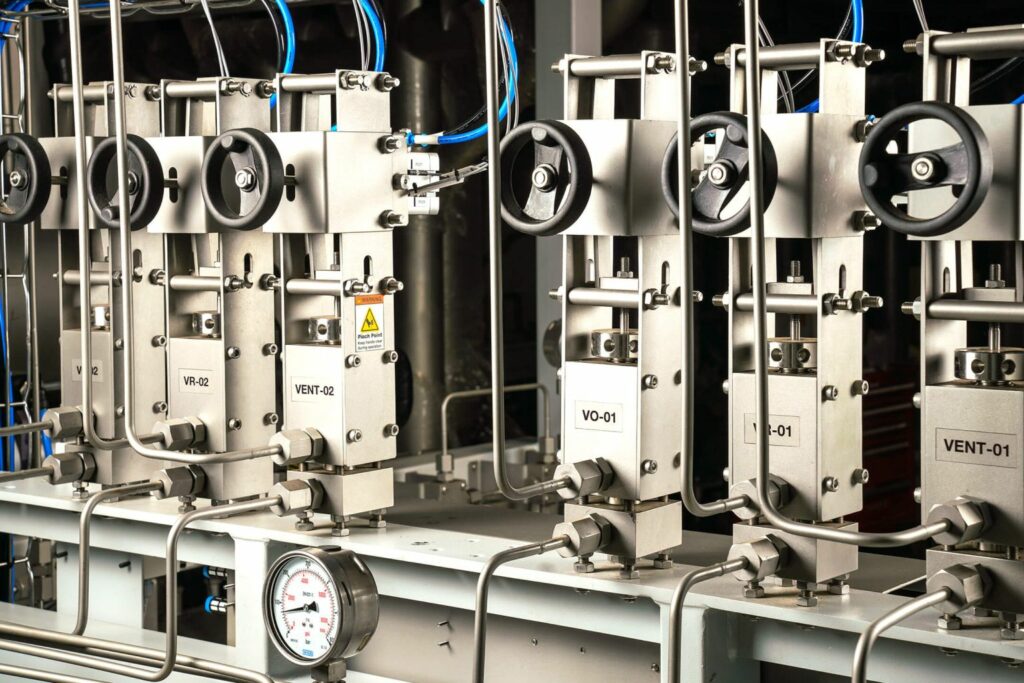
GMP extraction equipment is not a brand - it is a set of performance and design requirements your extraction system must meet. Hygienic design principles and cGMP compliance for pharmaceutical CO2 extraction covers these in detail. In summary, GMP extraction equipment must:
- Be constructed from materials that are inert, non-reactive, and cleanable - SS316L for pharmaceutical and nutraceutical applications.
- Have no dead-leg pipework or inaccessible internal product-contact surfaces that prevent thorough cleaning.
- Measure and record critical process parameters - temperature, pressure, flow rate, time - with calibrated instruments.
- Carry a unique equipment ID and be subject to a documented maintenance and calibration programme.
GMP extraction basics do not require exotic technology - they require the right design, proper maintenance, and complete documentation. A SCADA-controlled extraction system with data logging satisfies the measurement and record requirements of GMP extraction far more reliably than manual logging.

GMP Extraction Basics: Where to Start If You Are New to This
If you are building a GMP extraction programme for the first time, GMP extraction basics say: start with your highest-risk process steps and work outward. The extraction step itself - temperature, pressure, time, solvent - is typically the critical quality step. Document it first. Write the SOP. Set up the batch record. Validate the equipment. Then extend GMP compliance extraction discipline to the stages around it: raw material receipt, pre-processing, post-extraction handling, QC testing, and packing.
Good documentation practice is part of GMP extraction basics from day one. Every correction gets a line-through, signature, date, and reason. No white-out. No back-fill. No 'I will fill it in later.' These rules exist because uncontrolled records cannot be trusted - and an untrusted record is as bad as no record in a GMP inspection.
Scaling from lab to industry: choosing the right extraction equipment size helps you plan the capacity and equipment decisions that GMP extraction requirements will govern.
Where Buffalo Extraction Systems Fits In
Buffalo Extraction Systems manufactures extraction and pre-processing equipment built to meet GMP extraction requirements from day one - CE certified, SS316L contact surfaces, SCADA control with data logging and audit trails, CIP-compatible design, and IQ/OQ/PQ documentation packages included as standard. Three capacity scales at 200, 500, and 1,000 kg/hr dry output.
Conclusion
GMP extraction - good manufacturing practice extraction - is the documented quality system that allows you to prove, to every buyer and every regulator, that your extract is what you say it is. The GMP extraction definition is straightforward: write the procedures, follow them, test the output, and record everything. The GMP extraction standards you must comply with depend on your market. But the GMP extraction basics are the same everywhere, and the manufacturers who build them in from the start - in their equipment choices, their facility design, and their documentation culture - are the ones who pass inspections and win regulated-market customers.
Frequently Asked Questions
What does GMP extraction mean?
GMP extraction - good manufacturing practice extraction - is the system of documented controls that ensures an extraction process consistently produces a product of defined identity, purity, potency, and safety. It covers personnel training, premises design, GMP extraction equipment qualification, written procedures, batch records, quality control testing, and CAPA. The specific GMP extraction standard that applies to you depends on your product type and target market.
What is the GMP extraction definition?
The GMP extraction definition is: a manufacturing quality system applied to extraction operations that ensures the process is controlled, documented, and reproducible to a defined specification. GMP compliance extraction requires written SOPs, qualified equipment, batch-level records completed in real time, specification testing before batch release, and a corrective action system for deviations. Every major regulatory framework - EU GMP, FDA cGMP, WHO GMP - applies this definition with variations in enforcement and documentation format.
What are the basic GMP extraction requirements for botanical extract manufacturers?
Core GMP extraction requirements: written SOPs for every quality-affecting process step; batch records completed contemporaneously; GMP extraction equipment that is qualified (IQ/OQ/PQ), calibrated, and cleanable; a product specification with HPLC-confirmed testing before batch release; and a CAPA system for deviations and OOS results. GMP extraction basics also require that every person doing a GMP task is trained and that training is documented before the task is performed.
What is the difference between GMP extraction standards across EU, FDA, and WHO?
All three share the same GMP extraction basics - procedures, records, equipment qualification, testing, CAPA. EU GMP (EudraLex Volume 4) is legally binding in the EU and the most prescriptive. FDA cGMP (21 CFR Part 111) is legally binding for US dietary supplement manufacturers. WHO GMP is a guideline adopted into national law by 100+ member states, especially in Asia and Africa. GMP compliance extraction under any of these standards is essentially the same quality system with different regulatory authorities enforcing it.
What GMP extraction equipment features are required?
GMP extraction equipment must have: SS316L or equivalent inert, non-reactive product-contact surfaces; no dead-leg pipework or inaccessible internal areas; calibrated instruments measuring all critical process parameters (temperature, pressure, flow, time); data logging capability for batch records; a unique equipment ID; and a documented maintenance and calibration programme. GMP extraction equipment must be qualified through IQ, OQ, and PQ before its first GMP production batch.