What Vanilla Oleoresin Is and Why F&B Brands Specify It
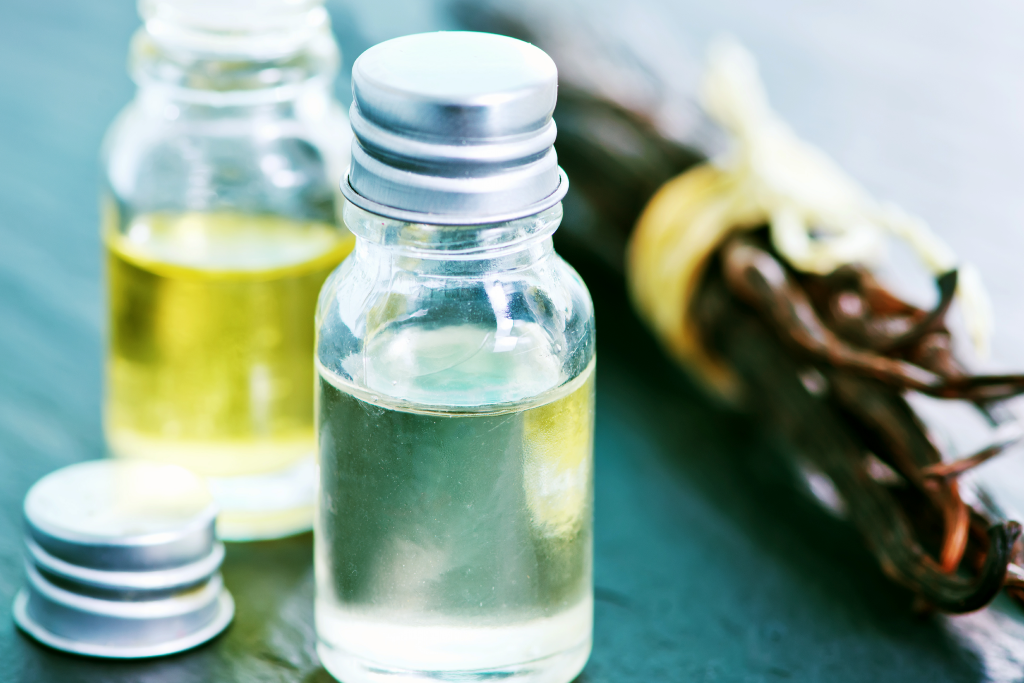
Natural vanilla is available commercially in four forms: vanilla extract, vanilla sugar, vanilla absolute, and vanilla oleoresin. Flavour science sources confirm that vanilla oleoresin is a dark brown, viscous semi-solid concentrate obtained from vanilla extract by solvent removal - typically by vacuum distillation of a 3-fold or stronger extract. It is thicker than a typical essential oil, highly concentrated, and more economical for industrial use than repeated volumes of liquid extract.
For F&B manufacturers, vanilla oleoresin is the format of choice when flavour intensity must be maximised at low addition levels, when a stable, shelf-storable concentrate is operationally simpler than liquid extract, or when a product’s moisture budget cannot accommodate additional aqueous volume. Understanding how it is made - and how vanilla oleoresin differs from vanilla extract and vanilla essence - is the starting point for specifying the right form for a given application.
Vanilla Bean Processing: From Harvest to Extraction-Ready Material
All commercial vanilla products begin with the same vanilla bean processing sequence. Vanilla planifolia orchids are grown primarily in Madagascar, Indonesia, Mexico, Tahiti, and Belize, and the beans are harvested unripe before undergoing a curing process that develops the characteristic aroma. Industry sources explain that the curing process takes approximately 3–4 months to complete, during which the enzymatic propagation of vanillin - the organic compound responsible for vanilla’s characteristic aroma - takes place. Uncured beans contain very little free vanillin; the curing process is what makes extraction worthwhile.
After curing, the vanilla bean processing for oleoresin production involves reducing the cured bean to the appropriate particle size for extraction. Cured beans are cut or comminuted to improve surface area and extraction contact. The particle size matters: too coarse and extraction efficiency is low; too fine and the resulting slurry is difficult to filter. Industrial bean comminution uses mechanical cutters or mills set to a defined output range. Once comminuted, the beans are ready for the extraction stage.
A critical point for manufacturers operating their own vanilla bean processing lines: cured beans should be at the correct moisture content before entering the extraction stage. Beans with residual moisture above specification dilute the extracting solvent and reduce yield. The biomass pre-processing line - with its validated 65–70°C dryer and 8–10% moisture output confirmed by the Rotronic XB20 humidity sensor - addresses this for facilities handling vanilla bean processing at scale. The VSD-controlled fine grinder operating at 2,000–4,000 RPM then provides the repeatable particle-size reduction required for consistent extraction yield. See supercritical CO2 extraction equipment for the downstream equipment context.
Vanilla Extraction Process: Ethanol Maceration vs Supercritical CO2
There are two main industrial vanilla extraction processes. The traditional route is ethanol maceration: a producer such as NOROHY describes it as maceration in alcohol for several hours, followed by decantation of the oleoresin (also called “vanilla concentrate” at this stage), evaporation of the alcohol, and filtration. The regulatory note is important: very few solvents are authorised for vanilla flavour extraction. Under applicable food regulations, only water, ethanol, and isopropanol may be used; no other solvent may be used to extract flavours from vanilla beans.
The more advanced vanilla extraction process is supercritical CO2 extraction. Peer-reviewed research confirms that SC-CO2 extraction of vanilla oleoresin avoids the problems related to alcohol residues, achieves high selectivity with purities close to 100%, produces extracts free of pathogens, and reaches efficiencies of 1–6% w/w. Published process conditions for vanilla oleoresin via SC-CO2: 20 MPa pressure and 60°C, with CO2 flow of 3 g/min applied for approximately 5 hours. Perfumer & Flavorist confirms the result as “a clean, low colour, intense vanilla flavor” that is essentially free from solvent residues.
Vanilla Extract vs Essence vs Oleoresin: The Manufacturing Differences
Format | Production Method | Concentration | Typical Application | Solvent Status |
Vanilla Extract (1-fold) | Ethanol-water maceration of cured beans | Defined by regulatory standard (1 fold = ~100g beans/litre) | Baking, ice cream, dairy, beverages | Ethanol present |
Vanilla Extract (3-fold+) | Concentrated maceration or multi-stage extraction | 3× to 10× standard strength | Industrial flavouring; confectionery | Ethanol present |
Vanilla Oleoresin | Solvent removal from concentrated extract by vacuum distillation | Semi-solid; very high vanillin content | Spray drying feedstock, industrial dosing, personal care | Solvent removed |
Vanilla Oleoresin (SC-CO2) | Supercritical CO2 extraction from cured beans | Concentrated; low colour | Premium F&B and cosmetic use | Zero residue |
Vanilla Absolute | Solvent extraction (typically ethanol) with full evaporation | Highly concentrated aromatic | Perfumery and high-end flavouring | Trace may remain |
Vanilla Essence (synthetic) | Synthesised vanillin in carrier | Defined vanillin% | Mass-market flavouring | Synthetic; no bean origin |
The vanilla extract vs essence distinction is fundamental for F&B label compliance. Vanilla extract is a natural product derived from vanilla beans by an authorised extraction process; vanilla essence is typically a synthetic vanillin solution with no botanical origin claim. The two are not interchangeable on a “natural flavour” label.
Vanilla extract uses at industrial scale extend across baked goods, confectionery, dairy, beverages, and plant-based foods. Vanilla oleoresin is increasingly specified where a concentrated, anhydrous format better suits the manufacturing process - particularly as a feedstock for spray-dried encapsulated vanilla powder or for cosmetic formulations where a water-free flavour carrier is needed.
Where Buffalo Extraction Systems Fits In
Buffalo Extraction Systems manufactures supercritical CO2 extraction systems suited to vanilla oleoresin production and conveyorised biomass pre-processing lines that handle the vanilla bean processing stage - comminution, controlled drying, and sifting - before extraction begins. The pre-processing line outputs dried, milled vanilla bean material at 8–10% moisture with VSD-controlled particle size, matched to the input specification of the downstream CO2 extractor. At industrial scale, this chain produces vanilla oleoresin that is free of solvent residue, consistent in vanillin content, and suitable for both F&B flavouring and cosmetic applications. See CO2 extraction vs cold-pressed extraction and CO2 extraction for cosmetics and the role of CO2 extracts for process comparisons.
- Pre-processing at 200, 500, or 1,000 kg/hr dry output - scalable vanilla bean processing before extraction.
- 65–70°C dryer with Rotronic XB20 humidity sensing - moisture reduction to 8–10% to maximise extraction solvent efficiency.
- VSD fine grinder 2,000–4,000 RPM - repeatable particle-size reduction for consistent extraction contact and yield.
- SC-CO2 extraction at process conditions validated in published research (20 MPa, 60°C) - purity approaching 100%, zero alcohol residue.
- SS304 food-grade contact surfaces throughout - hygienic construction for an ingredient used directly in food and cosmetic products.
Conclusion
Vanilla oleoresin is the most concentrated, shelf-stable form of natural vanilla flavour, and the supercritical CO2 vanilla extraction process is the method that delivers it at highest purity and lowest residue. The quality of the oleoresin is set before extraction begins - at the vanilla bean processing stage, where moisture control and particle size determine how efficiently the CO2 can access and dissolve the vanillin and aromatic compounds. For F&B brands specifying natural vanilla, understanding the full chain from cured bean to finished oleoresin is what allows an informed sourcing and manufacturing decision.
Frequently Asked Questions
What is vanilla oleoresin?
Vanilla oleoresin is a dark brown, viscous semi-solid concentrate produced from vanilla beans, containing vanillin and a full complement of other aromatic compounds. It is more concentrated and more economical for industrial use than liquid vanilla extract, and is produced either by vacuum distillation of an ethanol extract or directly by supercritical CO2 extraction from cured vanilla beans. It is used in F&B flavouring, cosmetic formulation, and as a feedstock for spray-dried encapsulated vanilla powder.
What is the difference between vanilla extract and vanilla essence?
Vanilla extract is a natural product derived from vanilla beans by an authorised extraction process - typically ethanol-water maceration of cured Vanilla planifolia beans - and qualifies as a natural flavouring. Vanilla essence is typically a synthetic vanillin solution in a carrier solvent with no botanical origin. The two are not interchangeable on a natural-flavour label; specifying vanilla extract requires genuine bean-derived material.
What are the vanilla extraction process options for industrial manufacturers?
The two main industrial routes are ethanol maceration - where cured beans are macerated in alcohol, which is then evaporated to leave the concentrated oleoresin - and supercritical CO2 extraction, which operates at around 20 MPa and 60°C and produces a solvent-free oleoresin with purity approaching 100%. Only water, ethanol, and isopropanol are permitted solvents for vanilla flavour extraction under applicable food regulations; no other solvent may be used.
Why is vanilla bean processing before extraction important?
The moisture content and particle size of cured beans directly affect extraction efficiency and yield. Beans with excess residual moisture dilute the extracting solvent; beans comminuted to the wrong particle size reduce extraction contact area or create filtration problems. Drying cured beans to 8–10% moisture and milling to a controlled particle size at the pre-processing stage is what gives the extraction system consistent, predictable input quality.
What vanilla extract uses are most common in industrial F&B manufacturing?
Industrial vanilla extract and oleoresin are used most widely in baked goods, confectionery, ice cream and dairy, beverages, and plant-based foods. Vanilla oleoresin is specifically preferred where a concentrated, anhydrous format is needed - particularly as a spray-drying feedstock for encapsulated vanilla powder or in cosmetic formulations where a water-free vanilla carrier is required.