What Is Supercritical Fluid Extraction?
Before exploring the principles, it helps to answer plainly: What is supercritical fluid extraction? It is a separation technique that uses a fluid - most commonly carbon dioxide - held above its critical temperature and pressure. In that supercritical state, the fluid carries the density of a liquid and the diffusivity of a gas at the same time. That dual character is the foundation of the whole supercritical extraction process: it lets the fluid move through solid raw material like a gas while dissolving valuable compounds like a liquid.
Pharmaceuticals, cosmetics, food, essential oils - every one of these industries has an application for supercritical fluid extraction, because it offers a safer, more efficient, and more environmentally friendly route to extracting valuable compounds.
The Core Supercritical Fluid Extraction Principle
The supercritical fluid extraction principle rests on a handful of physical ideas. Together, they explain why the process is so effective:
- Supercritical state: heated above its critical temperature and pressurized past its critical pressure, a substance loses the distinction between gas and liquid and gains unique solvent properties
- Critical temperature and pressure: choosing the right combination of the two sets the fluid's solvating power for a given target compound
- Tunable density: a supercritical fluid's density sits between gas and liquid, and adjusting pressure and temperature fine-tunes it for selective extraction
- For carbon dioxide, the threshold is its critical point of 31.1°C and 73.8 bar - modest conditions that make CO2 a practical, low-temperature solvent.
How the Supercritical Fluid Extraction Process Works
In practice, the supercritical fluid extraction process follows a clear sequence:
- Loading: prepared raw material is sealed into a high-pressure extraction vessel
- Pressurization: CO2 is compressed and heated past its critical point into the supercritical state
- Extraction: the supercritical fluid flows through the material, dissolving the target compounds
- Separation: the stream enters a separator where pressure drops, the CO2 reverts to gas, and the extract precipitates out
- Recovery: the CO2 gas is recompressed, recycled, and reused for the next cycle
- Buffalo Extraction Systems' detailed walkthrough of the supercritical CO2 extraction process and its comprehensive guide on supercritical fluids expand on each stage.
Key Advantages of the Supercritical Extraction Process
The principles above translate into a set of practical advantages that explain why the supercritical extraction process has spread across so many industries:
- Selective extraction: tuning pressure and temperature captures target compounds while leaving impurities behind
- Reduced thermal degradation: lower operating temperatures protect heat-sensitive compounds that steam distillation would damage
- Rapid extraction: the high diffusivity of supercritical fluids speeds up processing and raises productivity
- Environmentally friendly: CO2 is non-toxic, non-flammable, not a VOC, and recirculated rather than released
- Easy solvent recovery: simple depressurization separates and recovers the CO2, cutting solvent consumption and cost
Buffalo Extraction Systems' look at the advantages of supercritical fluid extraction sets these benefits against traditional methods.
What a Supercritical Fluid Extraction System Includes
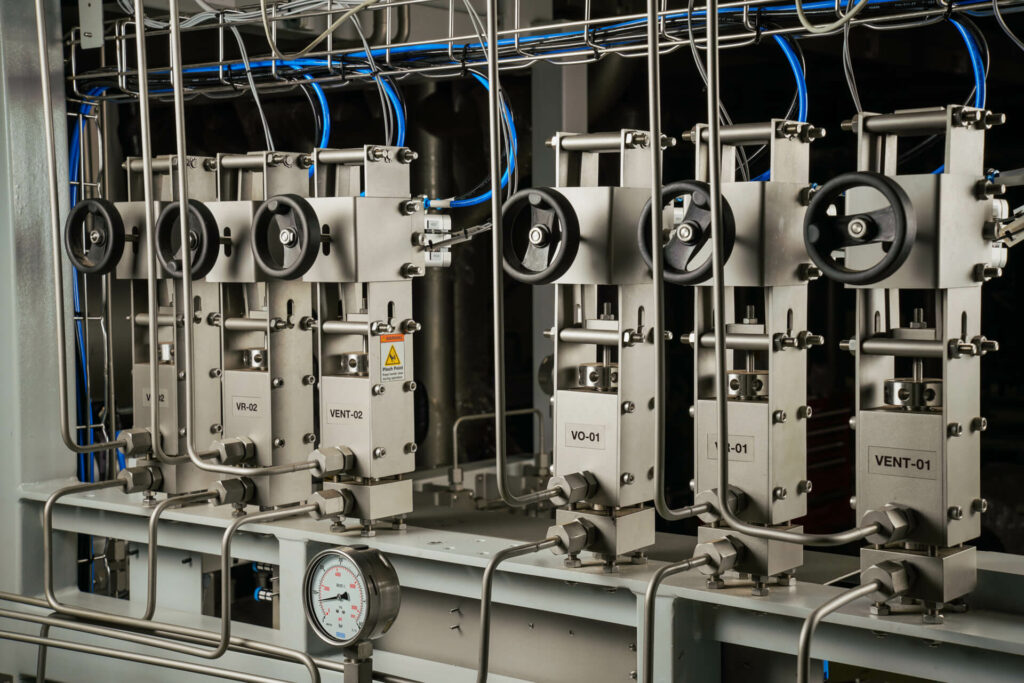
A working supercritical fluid extraction system brings the principles together as integrated hardware:
- Extraction vessel: a high-pressure chamber that holds the raw material during extraction
- CO2 pump: pressurizes and circulates the carbon dioxide through the circuit
- Separator: the vessel where pressure drops and the extract precipitates from the gas
- Heat exchangers and chillers: maintain the precise temperatures the process requires
- CO2 recovery loop: condenses and stores the gas for reuse, recovering up to 95%
Matched correctly to the target material and throughput, a supercritical fluid extraction system delivers consistent, repeatable, residue-free output. The integration of these subsystems is what turns the underlying principles into a working production platform - each component handling one stage of the cycle, from pressurization through extraction, separation, and recovery. A well-engineered system also adds SCADA-based automation, which logs every parameter, supports recipe-based control, and enables the documented consistency that regulated industries require.
Industries Powered by the Supercritical Extraction Process
The supercritical extraction process has spread across industries precisely because its core principles - tunable density, selective extraction, low-temperature operation - solve problems common to many sectors. Each industry draws on a different strength:
- Pharmaceuticals: solvent-free, high-purity actives that meet stringent regulatory standards and preserve fragile compounds
- Nutraceuticals: standardized botanical extracts for supplements and functional foods
- Food and beverage: clean flavors, natural colors, and oleoresins free of residual solvents
- Cosmetics: delicate botanical actives captured at low temperature for premium skincare
- Essential oils and fragrance: true-to-nature aromatic profiles for perfumery
This breadth is a major commercial advantage - a single supercritical fluid extraction system can serve more than one market. Buffalo Extraction Systems' overview of CO2 extraction for essential oils shows the technology applied across these categories.
Optimizing the Supercritical Extraction Process
Getting the best from the supercritical extraction process means mastering the variables that govern every run. Skilled operators treat them as a recipe - documented, validated, and repeated:
Pressure: the primary control, set across a wide band to tune CO2 density; carbon dioxide turns supercritical above 73.8 bar and 31.1°C
Temperature: balanced with pressure to fine-tune solvent density and selectivity
- CO2 flow rate: governs how quickly solvent contacts the material, affecting cycle time and yield
- Material preparation: consistent drying and milling ensure even, efficient extraction
- Co-solvent use: a small amount of ethanol extends the process to more polar compounds
Because these parameters are precisely measurable and repeatable, the supercritical fluid extraction process delivers the batch-to-batch consistency that regulated industries demand - the same recipe produces the same result, run after run. This repeatability is also what makes the process straightforward to validate and scale. Buffalo Extraction Systems' detailed walkthrough of the supercritical CO2 extraction process and its comprehensive guide on supercritical fluids explain how operators optimize each run.
Conclusion
The supercritical extraction process is built on elegant physics: push a fluid past its critical point, and it becomes a tunable solvent with the density of a liquid and the reach of a gas. Understanding the supercritical fluid extraction principle - supercritical state, critical conditions, tunable density, selective extraction - explains why the supercritical fluid extraction process delivers purer, gentler, more sustainable results than traditional methods. From pharmaceuticals to food, cosmetics, and fragrance, the technology has become a cross-industry standard. For any producer weighing a supercritical fluid extraction system, those principles are the foundation of a sound, future-ready investment.
Frequently Asked Questions (FAQ)
Q1. What is supercritical fluid extraction?
Supercritical fluid extraction is a separation technique that uses a fluid - most often carbon dioxide - held above its critical temperature and pressure. In this supercritical state, the fluid has the density of a liquid and the diffusivity of a gas, letting it penetrate raw material and dissolve target compounds efficiently.
Q2. What is the core principle of the supercritical extraction process?
The core supercritical fluid extraction principle is that a fluid above its critical point gains tunable solvent power. By adjusting pressure and temperature, operators change the fluid's density and selectivity - extracting specific compounds while leaving others behind, then recovering the solvent by depressurization.
Q3. How does the supercritical fluid extraction process work?
Raw material is loaded into an extraction vessel; CO2 is pressurized past its critical point and flows through the material, dissolving target compounds. The stream passes to a separator where pressure drops, the CO2 returns to gas, and the extract precipitates out. The CO2 is then recycled.
Q4. Why is the supercritical extraction process considered environmentally friendly?
Carbon dioxide is non-toxic, non-flammable, and not a volatile organic compound. In a supercritical fluid extraction system, the CO2 is recirculated rather than released, so the process avoids hazardous solvents, reduces emissions, and recovers the solvent for reuse.
Q5. What are the main advantages of supercritical fluid extraction?
Key advantages are selective extraction through pressure and temperature control, reduced thermal degradation of heat-sensitive compounds, rapid processing from high diffusivity, no solvent residue, and easy solvent recovery - together yielding purer, higher-quality extracts than traditional methods.
|
Put the supercritical extraction process to work for you. Buffalo Extraction Systems engineers supercritical CO2 extraction systems with precise pressure and temperature control, from pilot to industrial scale. → Discuss your extraction project: buffaloextracts.com |