How Does CO2 Extraction Work?
To understand how does CO2 extraction work, start with one idea: carbon dioxide can be turned into a solvent. Under everyday conditions, CO2 is just a gas. But when it is compressed and heated past its critical point of 31.1°C and 73.8 bar, it becomes a supercritical fluid - a state that diffuses through solids like a gas while dissolving compounds like a liquid. CO2 extraction works by using that supercritical fluid to wash valuable compounds out of plant material, then releasing the pressure so the CO2 evaporates and leaves a pure extract behind.
The Science: Why Supercritical CO2 Is Such a Good Solvent
Asking how supercritical CO2 extraction works is really asking about the supercritical state. Above the critical point, CO2 density becomes continuously tunable - from roughly 0.2 to 1.0 g/mL - simply by adjusting pressure. Higher density means stronger solvent power. That tunability lets operators target light aromatic volatiles at lower pressure and heavier oleoresins and waxes at higher pressure, all from the same machine. Combined with low operating temperatures, this is why the supercritical CO2 extraction process preserves delicate chemistry that heat-based methods destroy.
The Supercritical CO2 Extraction Process Step by Step
- Preparation: Raw plant material is dried and milled to increase surface area for efficient solvent contact
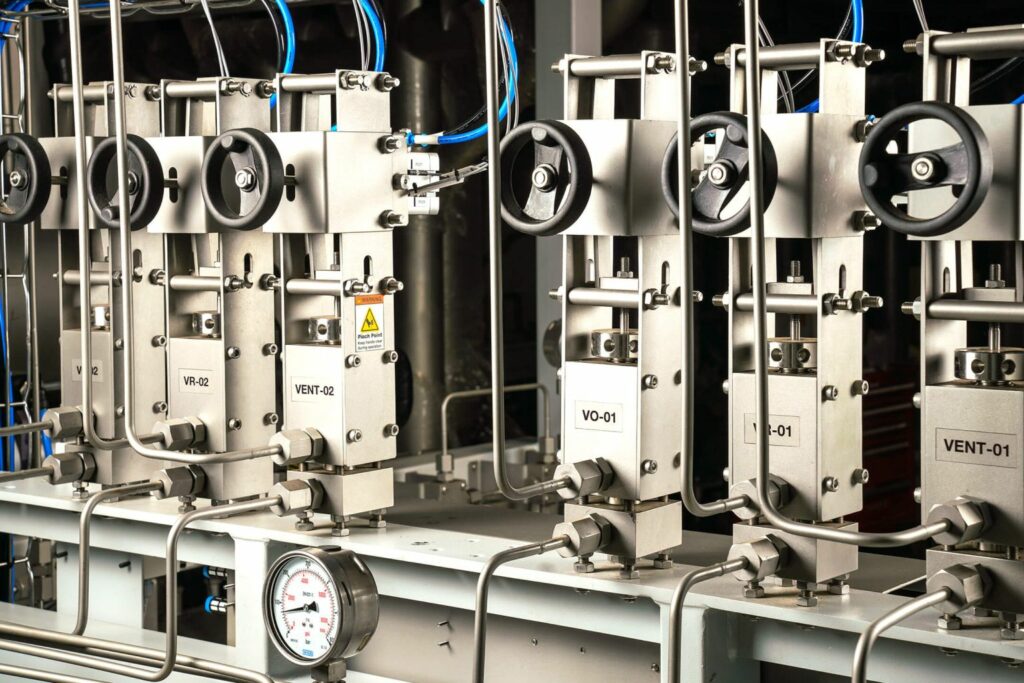
- Loading: The prepared material is sealed into a high-pressure extraction vessel
- Supercritical generation: CO2 is compressed and heated past its critical point into the supercritical state
- Extraction: supercritical CO2 permeates the plant matrix and dissolves the target compounds
- Separation: the CO2-and-extract stream enters a cyclone separator where pressure drops, CO2 returns to gas, and the extract precipitates out
- Recovery: the CO2 gas is condensed, stored, and recycled - 95%+ is reused per cycle
That closed loop is the core of how CO2 extraction works at a commercial scale. Buffalo Extraction Systems' supercritical CO2 extraction process article details each stage, and the comprehensive guide on supercritical fluids covers the underlying physics.
How Pressure Tunes the Extraction
The single most important variable operators control is pressure, because it sets CO2 density and therefore selectivity:
Pressure Range | CO2 Behavior | What It Extracts Best |
|---|---|---|
80-120 bar | Gas-like, low-density | Light volatile aromatics, top notes |
120-250 bar | Moderate density | Full essential oil profile |
250-500 bar | Liquid-like, high-density | Oleoresins, waxes, heavy compounds |
By stepping pressure through a cycle, a single run can fractionate an extract into different compound classes. Buffalo Extraction Systems' article on why precise pressure control is critical explains why parameter precision drives consistency.
Why CO2 Supercritical Fluid Extraction Outperforms Older Methods
- Purity: CO2 evaporates completely, so CO2 supercritical fluid extraction leaves no solvent residue
- Potency: operating temperatures of 35-60°C protect heat-sensitive bioactives that steam distillation degrades
- Selectivity: pressure tuning targets specific compound classes - impossible with steam or simple solvents
- Sustainability: carbon dioxide is non-toxic, non-flammable, and recycled in a closed loop
- Versatility: one platform handles essential oils, oleoresins, cannabinoids, and more
Buffalo Extraction Systems' overview of CO2 extraction for essential oils and the principles of the supercritical extraction process show these advantages in production use.

How CO2 Extraction Compares to Traditional Methods
Seeing how does CO2 extraction work alongside older techniques makes its advantages concrete. Traditional methods each have real limitations that the supercritical CO2 extraction process overcomes:
- Steam distillation: operates at 95-100°C, degrading heat-sensitive compounds and capturing only the volatile fraction
- Hexane solvent extraction: effective but risks residual solvent, tightly regulated under 21 CFR 173.270
- Cold pressing: simple but low-yielding and limited to oil-rich materials
CO2 supercritical fluid extraction sidesteps all three problems. It runs at low temperature to protect delicate chemistry, leaves no residual solvent since carbon dioxide carries GRAS status under 21 CFR 184.1240, and tunes its selectivity through pressure in a way no traditional method can match. That combination of purity, potency, and control is why the supercritical CO2 extraction process has become the benchmark. Buffalo Extraction Systems' overview of CO2 extraction for essential oils shows these advantages in production use.
The Role of Separators and CO2 Recovery
Understanding how does CO2 extraction work fully means looking past the extraction vessel to the separation and recovery stages, where the process becomes both economical and sustainable. After the supercritical CO2 has dissolved the target compounds, the loaded stream passes into a separator. There, pressure is reduced below CO2's critical point of 31.1°C and 73.8 bar, the CO2 reverts to a gas, and the extract precipitates out for collection. Multi-stage separators can drop pressure in steps, fractionating the extract into different compound classes from a single run.
The CO2 does not go to waste. It is recompressed, condensed, and recycled - modern closed-loop systems recover around 95% of the carbon dioxide for the next cycle. This recovery loop is what keeps the supercritical CO2 extraction process cost-effective and environmentally sound. Buffalo Extraction Systems' detailed walkthrough of the supercritical CO2 extraction process covers the separation and recovery stages in operational depth.
Factors That Influence Extraction Performance
How well a CO2 extraction process performs depends on several interacting variables that operators learn to balance:
- Pressure: the primary control, set anywhere from roughly 100 to 350 bar to tune CO2 density and selectivity
- Temperature: balanced against pressure to fine-tune solvent power while protecting heat-sensitive compounds
- CO2 flow rate: governs how quickly solvent contacts the material, influencing cycle time and yield
- Material preparation: consistent drying and milling ensure even, efficient extraction
- Co-solvent use: A small amount of ethanol can extend the process to more polar compounds
Mastering these variables is what turns the theory of how does supercritical CO2 extraction work into reliable, repeatable production. Buffalo Extraction Systems' article on why precise pressure control is critical explains why parameter precision drives consistency.
Conclusion
How does CO2 extraction work? It turns ordinary carbon dioxide into a precision solvent. Pushed past its critical point, CO2 becomes a supercritical fluid that diffuses through plant material and dissolves target compounds; drop the pressure and it evaporates, leaving a clean, potent extract behind. The supercritical CO2 extraction process is closed-loop, tunable through pressure, gentle on heat-sensitive chemistry, and sustainable by design - which is exactly why CO2 supercritical fluid extraction has become the benchmark for high-purity botanical extraction across so many industries.
Frequently Asked Questions
Q1. How does CO2 extraction work?
CO2 extraction works by pressurizing carbon dioxide above its critical point so it becomes a supercritical fluid. In this state, it flows through plant material like a gas and dissolves target compounds like a liquid. When pressure is released in a separator, the CO2 reverts to gas, and the pure extract is left behind.
Q2. How does supercritical CO2 extraction work differently from liquid CO2?
Supercritical CO2 extraction operates above 31.1°C and 73.8 bar, where CO2 has gas-like diffusion and liquid-like solvent power - strong, fast, broad extraction. Subcritical (liquid) CO2 works below those conditions, giving gentler, more selective extraction of delicate aromatics at the cost of speed.
Q3. What is the critical point in the supercritical CO2 extraction process?
The critical point of carbon dioxide is 31.1°C and 73.8 bar. Above both values simultaneously, CO2 enters the supercritical state. This is the threshold the supercritical CO2 extraction process must cross for the fluid to gain its dual gas-and-liquid extraction behavior.
Q4. Why is CO2 recycled in the extraction process?
After separation, the CO2 is a gas again, so it is recompressed, condensed, and reused for the next cycle. Modern systems recover 95% or more of the carbon dioxide, which keeps CO2 supercritical fluid extraction both cost-effective and environmentally sound.
Q5. How long does one CO2 extraction cycle take?
A typical supercritical CO2 extraction cycle runs 1-4 hours, depending on the botanical, particle size, vessel volume, and target compounds. Operators tune pressure, temperature, and CO2 flow rate to balance extraction speed against selectivity for specific compound classes.
See the supercritical CO2 extraction process in action. Buffalo Extraction Systems engineers supercritical CO2 platforms with precise pressure control and SCADA automation, from pilot to industrial scale. → Discuss your extraction project: buffaloextracts.com |