What Is CO2 Extraction?
"What is CO2 extraction?" is one of the most common questions asked by producers evaluating modern extraction technology. In simple terms, CO2 extraction is a method that uses carbon dioxide as a solvent to pull valuable compounds - essential oils, oleoresins, cannabinoids, terpenes - out of plant material. When carbon dioxide is held above its critical point of 31.1°C and 73.8 bar, it enters a supercritical state where it diffuses through plant tissue like a gas yet dissolves compounds like a liquid. That dual behavior is what makes CO2 extraction so effective and so clean.
Unlike hydrocarbon or hexane solvents, carbon dioxide leaves no residue - it simply evaporates when pressure returns to normal. CO2 also carries GRAS status under 21 CFR 184.1240, and FDA GRAS designation, so the output is natively suited to food-grade and pharmaceutical applications. Buffalo Extraction Systems' comprehensive guide on supercritical fluids covers the underlying physics in depth.
What Is the CO2 Extraction Method - Supercritical vs Subcritical
The CO2 extraction method has two operating modes, and understanding both answers the deeper question of what the CO2 extraction method is capable of:
Supercritical CO2: operates above 73.8 bar and 31.1°C - high solvent power, broad compound capture, faster cycles, captures heavier oleoresins and waxes
Subcritical CO2: operates below the critical point at lower pressure and temperature - gentler, more selective for delicate volatile aromatics, longer cycle times
Most commercial producers run supercritical mode for yield and speed, then fine-tune pressure to target specific compound classes. Buffalo Extraction Systems' article on the principles of the supercritical extraction process explains how operators dial in selectivity.
How the CO2 Extraction Process Works - Step by Step
- Material preparation - botanical is dried and milled to a consistent particle size (typically 1-3 mm) to maximize solvent contact
- Loading - prepared material is sealed into a stainless steel extraction vessel rated for high pressure
- Pressurization - CO2 is pumped above its critical point, entering the supercritical state
- Extraction - supercritical CO2 flows through the material, dissolving target compounds over a 1-4 hour cycle
- Separation - pressure drops in the separator; CO2 returns to gas and the pure extract precipitates out
- Recovery - the CO2 gas is recompressed and recycled, with 95%+ recovery in modern systems
This CO2 extraction process is closed-loop, which is what makes it both economical and environmentally sound. Buffalo Extraction Systems' supercritical CO2 extraction process article walks through each stage in operational detail.
CO2 Extraction vs Traditional Methods
Factor | CO2 Extraction | Steam Distillation | Solvent (Hexane) |
|---|---|---|---|
Operating temperature | 35-60°C | 95-100°C | 30-65°C + recovery heat |
Solvent residue | None - GRAS | None (water-based) | Trace residues possible |
Bioactive retention | 90-95% | 60-75% | 75-85% |
Captures oleoresins | Yes | No (volatiles only) | Yes |
Tunable selectivity | Yes (pressure) | No | Limited |
Environmental profile | Recyclable, non-toxic | Water/energy intensive | Hazardous solvent |
What a Complete CO2 Extraction System Includes
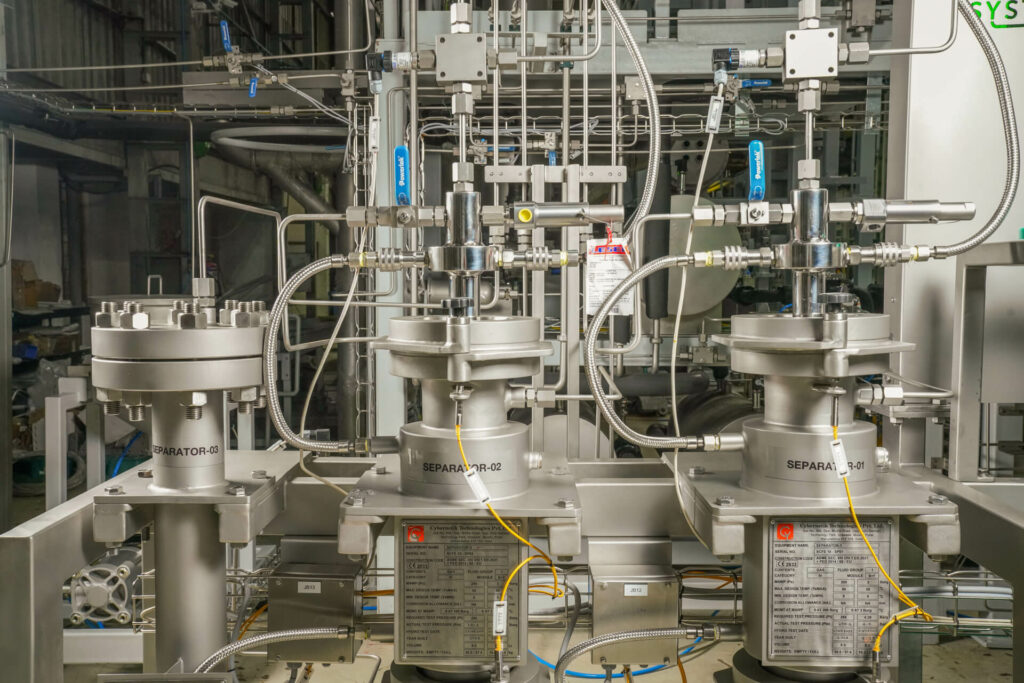
A production-ready CO2 extraction system is more than the extraction vessel. The core subsystems are:
- Extraction vessel(s): high-pressure stainless steel chambers, typically rated 350-700 bar
- CO2 pump: a diaphragm or piston pump that pressurizes and circulates the carbon dioxide
- Separators: one or more cyclone vessels where pressure drops and extract precipitates
- Chiller and heat exchangers: precise temperature control across the circuit
- CO2 recovery loop: condenser and storage that recycle 95%+ of the gas per cycle
- SCADA control: recipe automation, parameter logging, and safety interlocks
Buffalo Extraction Systems builds CO2 extraction systems across three scale tiers - pilot (5L), commercial (25L), and industrial (100L) - all sharing the same hygienic-design construction and automation backbone. Buffalo Extraction Systems' overview of CO2 extraction for essential oils shows the systems in a production context.

Applications of CO2 Extraction
- Pharmaceuticals: high-purity botanical actives for therapeutic formulations
- Nutraceuticals: full-spectrum bioactive extracts for dietary supplements
- Food and beverage: clean flavors, oleoresins, and natural colors
- Cosmetics: residue-free botanical actives for premium skincare
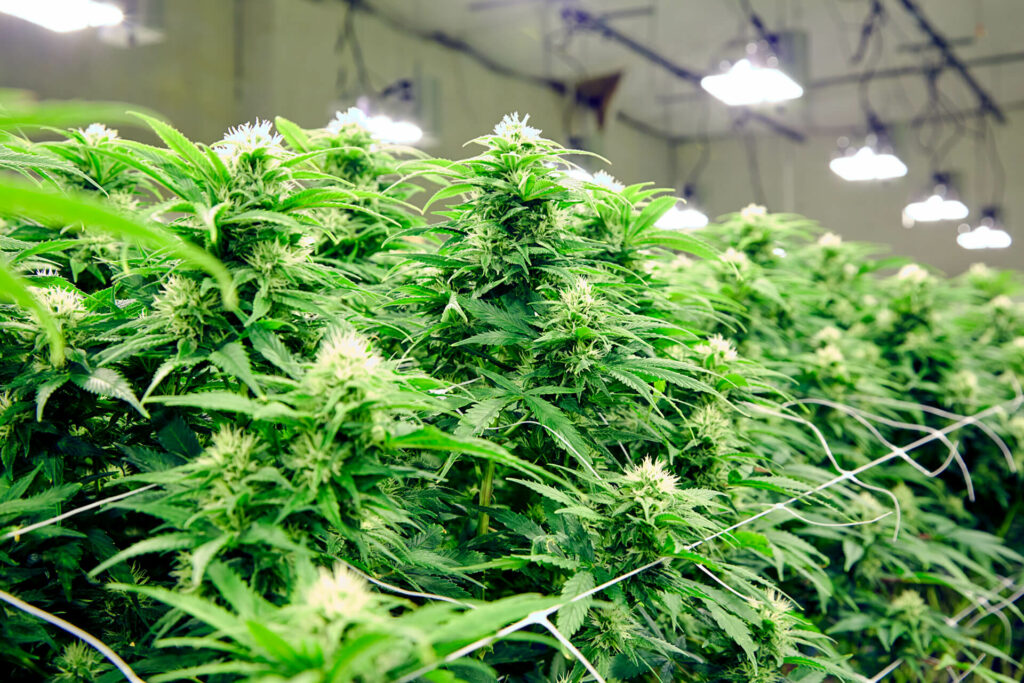
- Cannabis and hemp: cannabinoid and terpene extraction for oils and concentrates
Across all of these, the appeal of CO2 extraction is the same - verifiable purity, preserved potency, and a residue-free product. Buffalo Extraction Systems' note on safe CO2 extraction methods details the safety advantages that also make CO2 attractive.
What Affects CO2 Extraction Yield and Quality
The output of any CO2 extraction process is shaped by a set of controllable variables. Understanding them is what separates a consistent, high-yield operation from an unpredictable one:
- Pressure: raising pressure increases CO2 density and solvent power; commercial systems typically operate between 100 and 350 bar, depending on the target compound
- Temperature: held modestly above the critical temperature of 31.1°C, it protects heat-sensitive compounds while supporting extraction
- Particle size: milling botanical material to a consistent size maximizes the surface area the solvent can reach
- Flow rate and time: these govern how completely the supercritical CO2 contacts and extracts the material
Because these parameters can be precisely set and repeated, the CO2 extraction process delivers the batch-to-batch consistency that pharmaceutical and food customers demand. Buffalo Extraction Systems' article on the principles of the supercritical extraction process explains how operators tune them for specific results.
CO2 Extraction and Sustainability
Beyond purity and potency, the CO2 extraction process carries a strong environmental case - one that matters increasingly to regulators, customers, and investors. Carbon dioxide is non-toxic, non-flammable, and is not classed as a volatile organic compound. In a closed-loop CO2 extraction system, the gas is recompressed and reused rather than vented, with modern systems recovering 95% or more of the CO2 per cycle. This stands in sharp contrast to hexane and other hydrocarbon solvents, which are hazardous to handle, costly to dispose of, and tightly regulated under rules such as 21 CFR 173.270. By replacing those solvents, what is CO2 extraction at its core becomes clear - a cleaner, safer, and more sustainable route to high-value extracts. Buffalo Extraction Systems' overview of safe CO2 extraction methods details the safety and environmental advantages further.
Conclusion
So, what is CO2 extraction? It is the modern standard for producing pure, potent, solvent-free botanical extracts. The CO2 extraction process pairs supercritical carbon dioxide with closed-loop engineering to outperform steam distillation and hexane solvents on purity, retention, and environmental profile. For producers weighing a CO2 extraction system, the technology pays back through premium output quality and a regulatory-ready, residue-free product.
Frequently Asked Questions
Q1. What is CO2 extraction in simple terms?
CO2 extraction is a method that uses carbon dioxide - pressurized into a supercritical state where it behaves as both a gas and a liquid - to dissolve and separate valuable compounds from plant material. Because the CO2 reverts to gas at ambient pressure, the finished extract is left with no solvent residue.
Q2. What is the CO2 extraction method used for?
The CO2 extraction method is used to produce essential oils, oleoresins, cannabinoids, terpenes, and other bioactive compounds for the pharmaceutical, nutraceutical, food and beverage, cosmetic, and fragrance industries. It is favored wherever purity, potency, and a residue-free label matter.
Q3. Is CO2 extraction better than steam distillation?
For heat-sensitive botanicals, generally yes. CO2 extraction operates at 35-60°C versus 95-100°C for steam distillation, so it preserves more bioactive compounds and captures the heavier oleoresin fraction steam cannot. Steam distillation remains cheaper for hardy, heat-stable botanicals.
Q4. Does a CO2 extraction system leave any solvent residue?
No. Carbon dioxide is the solvent, and it evaporates completely once pressure returns to ambient. CO2 carries GRAS status under 21 CFR 184.1240 and is not classified as a residual solvent of concern, which is why CO2-extracted output is considered solvent-free.
Q5. How much does a CO2 extraction system cost?
A CO2 extraction system ranges from roughly USD 80,000-180,000 for lab-scale units to USD 1-2 million for industrial-scale lines, depending on vessel volume, automation level, and certification. Pilot-scale systems suit boutique producers; industrial systems serve contract manufacturing.
Explore a CO2 extraction system built for your scale. Buffalo Extraction Systems engineers pilot, commercial, and industrial CO2 extraction systems with SCADA automation and hygienic-design construction. → Discuss your extraction project: buffaloextracts.com |